Nov 2nd 2026
Outdoor Cat Beds: What Works on a Porch, and What Works in Winter
A porch cat needs a dry place to lounge. A winter cat needs a warm place to sleep. Here is how to give each one the right outdoor cat bed.
If you are shopping for an outdoor cat bed, you are probably picturing one of two cats. The one who suns on your porch all afternoon, or the one who is still out there at 2 a.m. in January. They need completely different things, and most outdoor cat beds are only built for the first one.
For the Porch Cat: A Raised Outdoor Cat Bed That Dries Fast
The porch cat's problem is not cold. It is damp. The ground holds moisture, morning dew soaks into a cushion, and a fabric bed left outside turns into a sponge nobody wants to lie on by the second week.
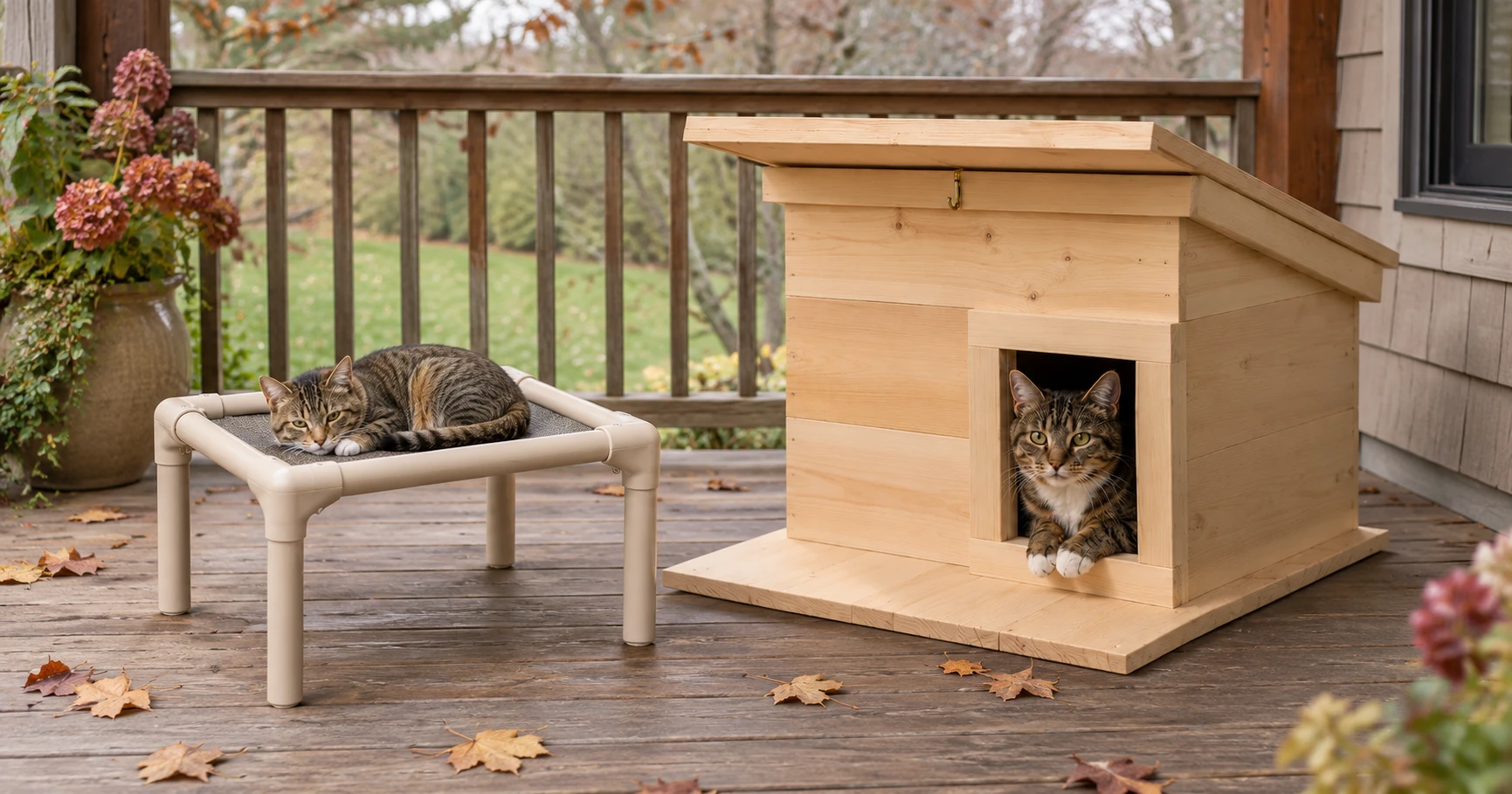
What works is a bed raised off the surface with a fabric that sheds water instead of holding it. Our raised PVC outdoor cat bed sits 12 inches up on a furniture-grade PVC frame, with an outdoor mesh option that drains and dries. The almond frame is rated for indoor and outdoor use, the hardware is stainless steel, and an optional fleece pad comes inside on cold nights.

"I have watched a lot of outdoor beds fail, and it is almost never the frame. It is the fabric. Anything that soaks up water stays wet, and a cat will simply stop using a bed that is cold and damp under them. Mesh that drains, a frame that cannot rot and hardware that will not rust in a season: that is the whole checklist for a porch bed. Get those three right and it still looks decent next summer."

For the Winter Cat: The Bed Has to Go Inside an Outdoor Cat House
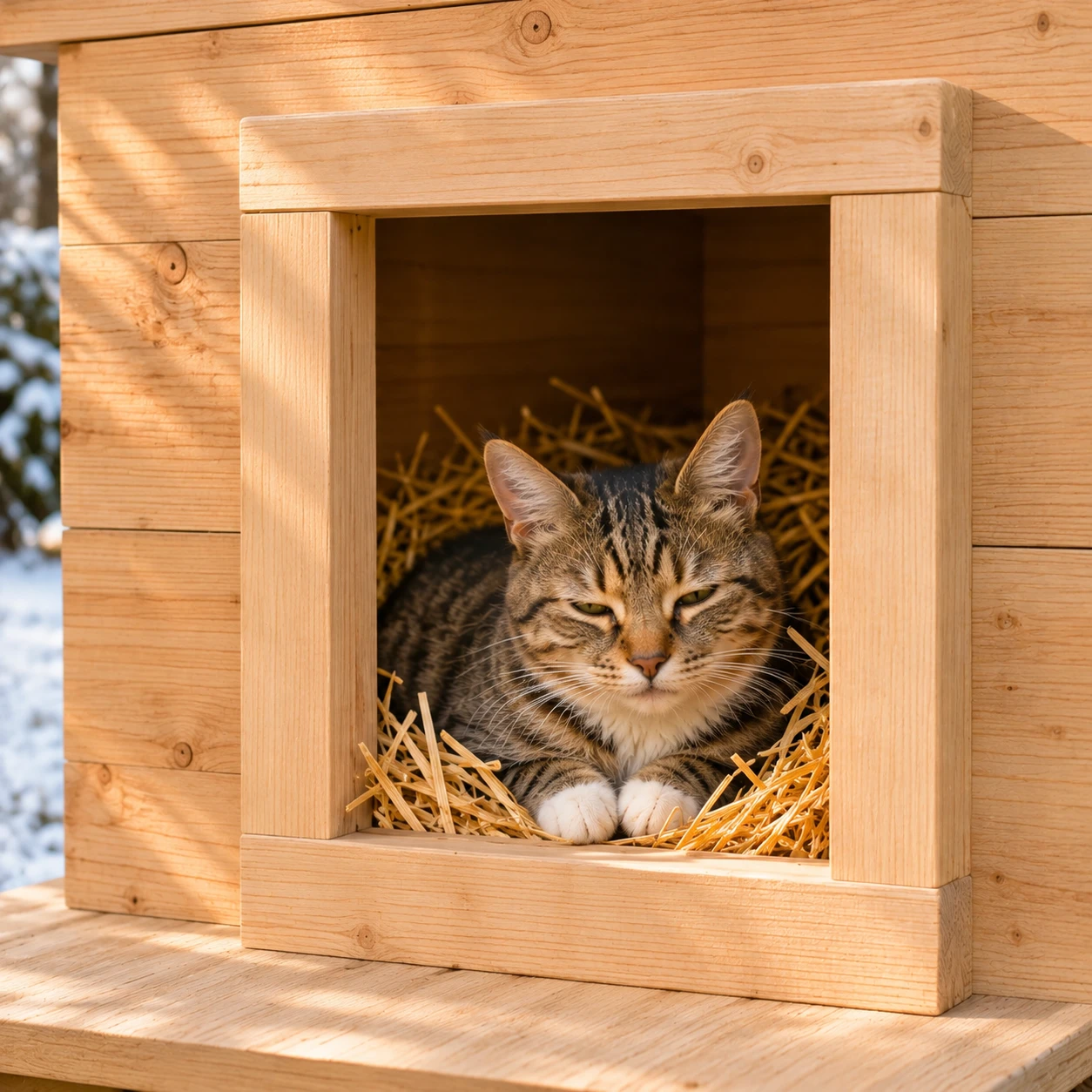
A cat sleeping outside in winter does not need a better bed. They need walls and a roof, because an open bed, however plush, loses the cat's body heat to the wind as fast as they make it. The right winter outdoor cat bed is really an outdoor cat house with something warm inside, and a snug one, for the reasons in why bigger is not warmer.
Look for a house that sits off the ground, closes out the weather and keeps the bedding dry. Our cedar outdoor cat house uses 3/4-inch cedar boards, vinyl flaps on the door and window, and a raised threshold that keeps straw or a heating pad from sliding out. For two cats, the double-deck cedar cat house gives each one its own level, door and deck.
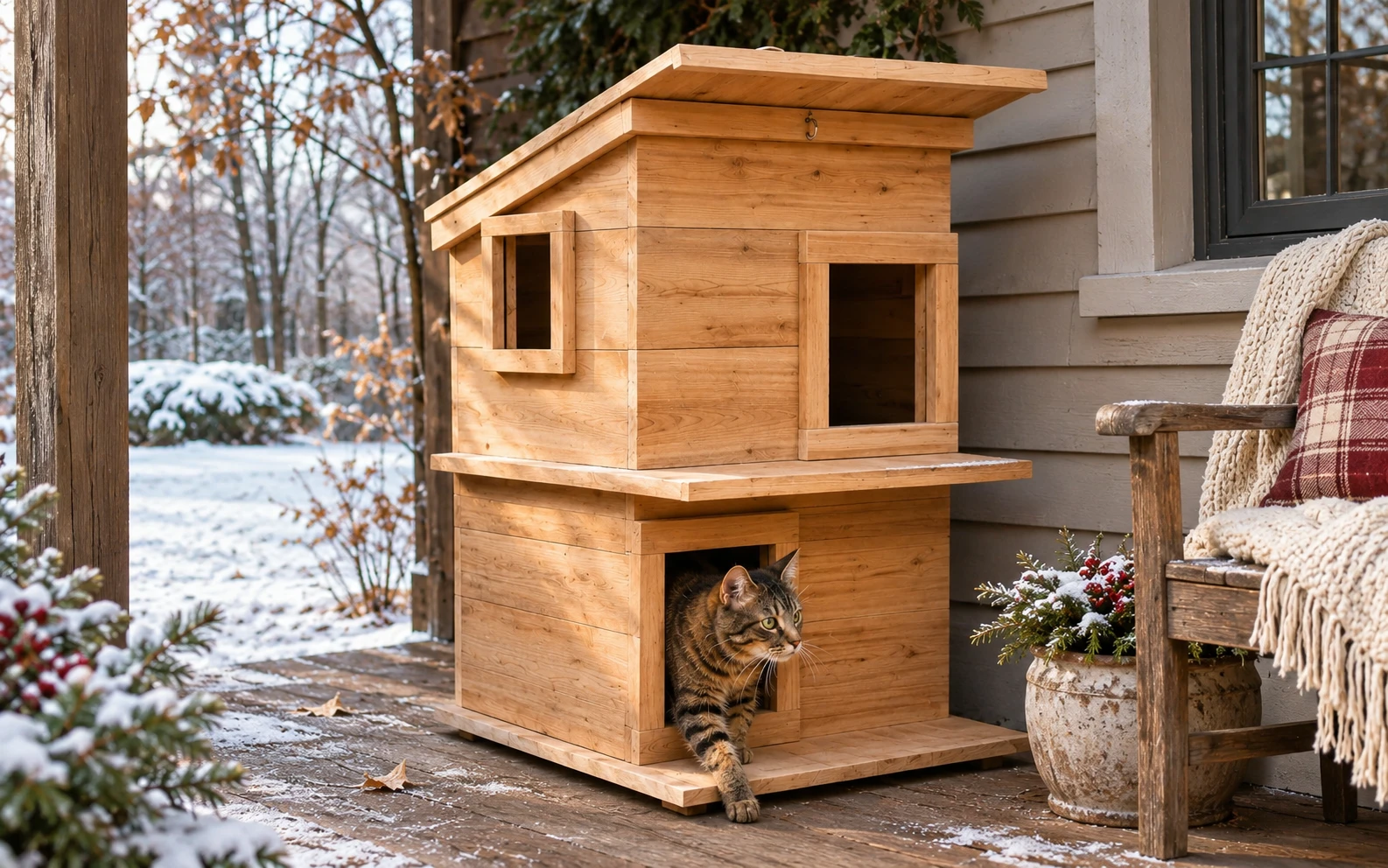
A cedar house with its door turned away from the wind does more for a winter cat than the thickest cushion on the porch.
Straw, Heat and the Small Details That Keep a Cat Warm
What goes inside matters as much as the house. Blankets and towels look cozy, but they soak up moisture and stay cold, while loose straw stays dry and lets a cat burrow into a warm pocket. Swap it out when it gets matted or damp and the house keeps working all season.
Where there is power, a heated outdoor cat bed pad made for cedar pet houses warms to about 102 degrees when a cat lies on it and stays 10 to 15 degrees above the air temperature when they do not. The first 18 inches of its cord are capped in steel, so it is not a chew toy. For a faster setup, a soft-sided outdoor kitty house goes together in minutes without tools and has two exits, so a cat is never cornered inside.
"Outdoor cats choose a shelter the same way they choose everything else: does it feel safe? A house with one small doorway facing an open yard can feel like a trap, so plenty of cats will inspect it and never sleep in it. Put it somewhere quiet and sheltered, with the door facing a wall or fence instead of open ground, and keep it near where they already eat. A second exit or a side window helps the warier ones. Once a cat has slept warm in it, you will not have to convince them again."