Sep 1st 2026
Outside Cat House: What Actually Survives Real Weather
A 30-year construction audit of what actually holds up outside -- not what the listing photo promises.
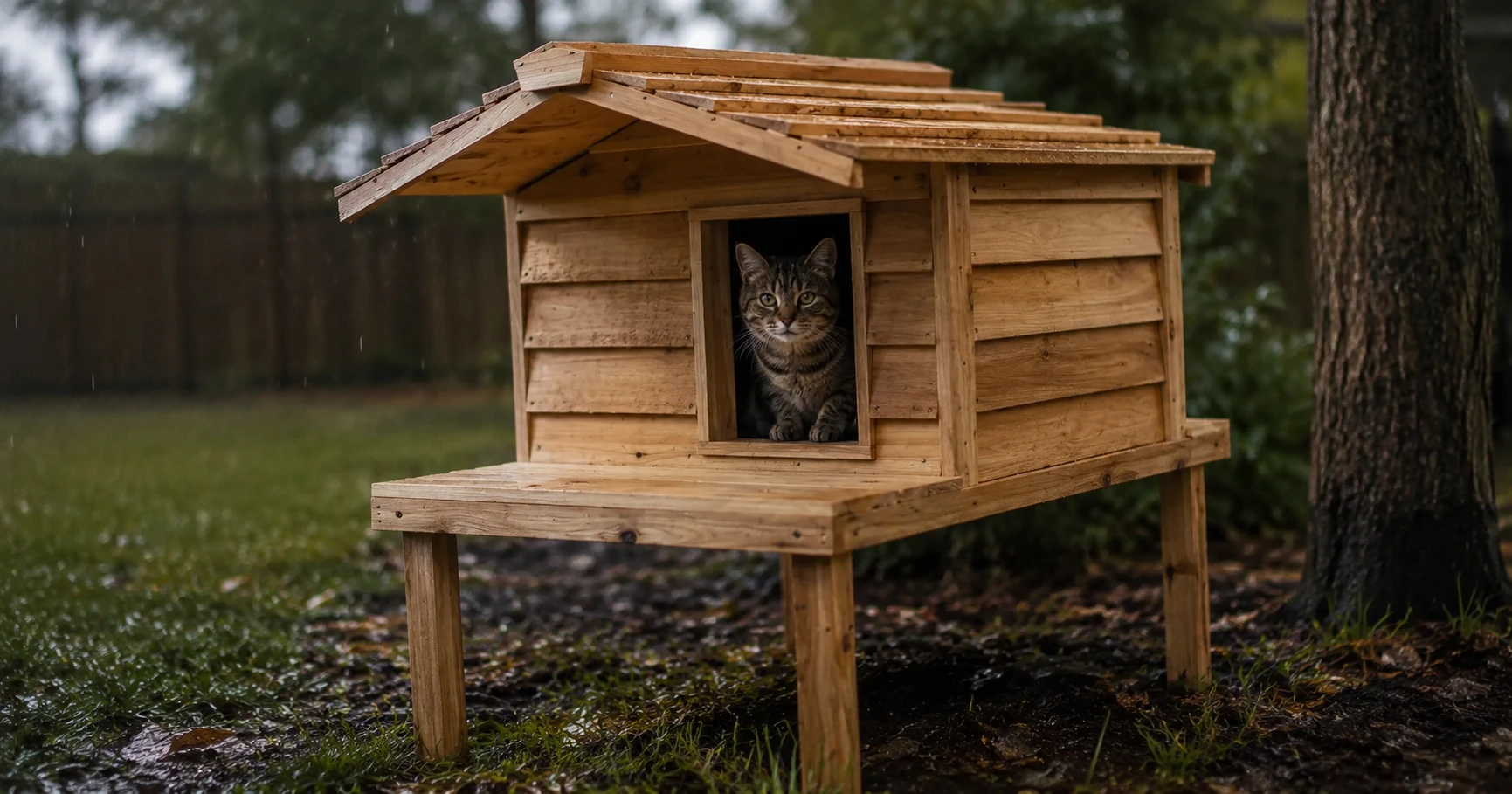
Every outside cat house on the market claims to be weatherproof. Most of them are being optimistic, and the cat sleeping under your porch instead of inside the one you bought is the one who found out first.
What "Weatherproof" Actually Means (and What It Doesn't)
Weatherproof is not a material, it is a design decision, and most listings only tell you about the material. A cedar wall is a good start, but cedar with a flat roof and no overhang will still trap water at every seam, and that seam is where rot begins -- usually inside the first wet season, not the fifth.
The base matters just as much as the roof. A floor sitting flush with the ground or a deck pulls moisture up from underneath, which is the same reason the material logic behind cedar outdoor furniture always comes back to keeping wood off wet surfaces, not just choosing the right species.

"I check the roofline before I check anything else. A flat roof or one with no overhang means water sits right at the seam, and that seam is where rot starts. Cedar matters, but cedar with a bad roof design still fails. I want a few inches of overhang past the walls, and I want the floor raised off the ground, not flush with the dirt or the deck. Ground contact is the fastest way to turn a good cedar house into compost. If a listing doesn't show me the roofline and the base clearly, I assume there's a reason for that."

Why Bigger Isn't Warmer
It feels generous to buy the biggest house on the page, but a cat stays warm by heating the air around its own body, and a large interior means more air to heat with the same amount of cat. A right-sized house that fits one or two cats snugly holds warmth far better than a spacious one that never quite gets there.
Insulation does the rest of the work, and there is a real difference between single-wall construction and a genuinely double-walled or insulated build. Neither shows up clearly in a product photo, which is exactly why it is worth checking the specifications instead of the picture before you decide.
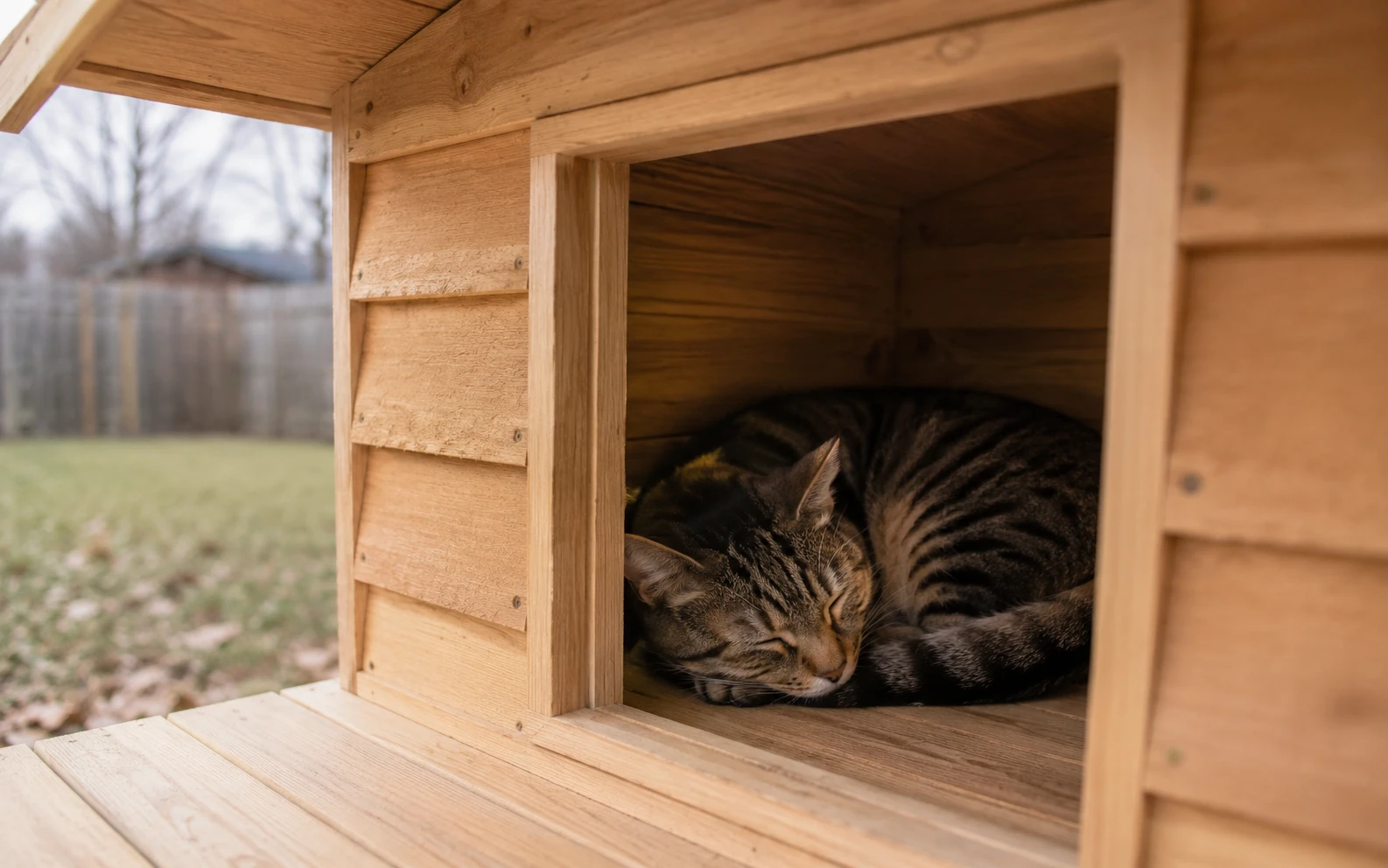
A snug interior traps body heat far more effectively than a spacious one.
How Much Room an Outdoor Cat Actually Needs
Large-breed cats and multi-cat households push the "right-sized" rule in the other direction. A cat house outdoor large enough for a Maine Coon or two cats sharing a territory still needs enough interior clearance to turn around and stretch out, even if the overall footprint stays modest from the outside.
A house is also only one piece of an outdoor setup. Cats spend time outside doing more than sleeping, and pairing a solid shelter with real outdoor cat furniture built for the same conditions gives them somewhere to climb and watch, not just somewhere to hide from the rain.
"A cat will not use a shelter it doesn't trust, and trust outdoors is mostly about escape routes. If the entrance is the only way in and out, a cautious cat may never go inside no matter how warm it is. I look for houses placed somewhere quiet with a clear line of sight to the surroundings, not tucked into a corner where a cat would feel cornered. Warmth matters, but a warm house a cat refuses to enter helps nobody."