
Apr 26th 2026
Why Maine Coons Need a Different Kind of Cat Tree
Construction-first picks sized and built for large breed cats — solid wood, wide base, and zero wobble.
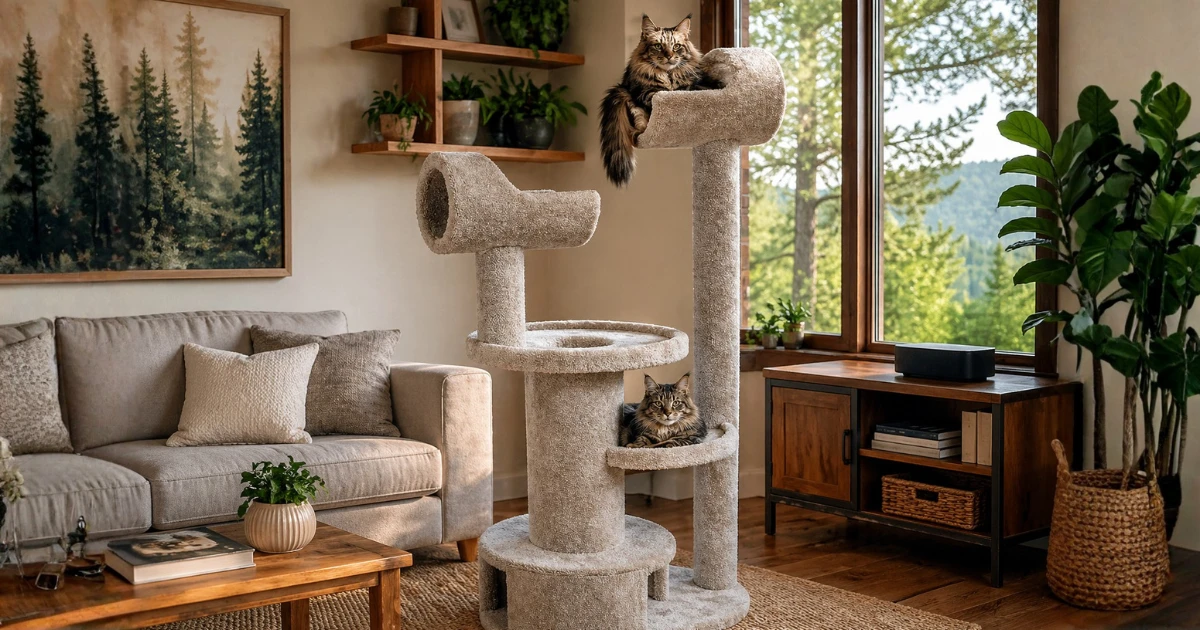
A standard cat tree is engineered for the average 10-pound feline — but the physical reality of a 20-pound Maine Coon demands an entirely different structural philosophy. When a large breed cat leaps, they don't simply apply static weight; they generate significant kinetic force on landing. For a Maine Coon, a wobbly tower isn't a minor nuisance. It's a mechanical failure that leads to furniture rejection, territorial anxiety, and real safety risk.
Finding the best cat tree for Maine Coon owners starts with looking past the carpet and focusing on the skeleton. Every component — from base footprint to post diameter — must be scaled up to handle the torque and weight load of a breed that can stretch to nearly 40 inches in length.
The Physics of the "Power Launch"
Maine Coons are thrust jumpers. Unlike smaller breeds that pick their way up a tower in stages, a Maine Coon commits to a full-power leap to reach high perches in one motion. If the tower has a narrow base or lightweight MDF core, that force creates a lever effect that can tip the entire unit. A true large cat tree needs a weighted, double-thick base to act as a physical anchor. For any tower over five feet tall, we recommend a minimum base footprint of 24 inches.
The "shiver" that runs through hollow cardboard posts on impact is another major deterrent. Large cats need the density of a solid wood cat tree for large cats to absorb landing force without vibration. When the furniture feels as immovable as a real tree, the cat registers it as safe territory — and enters the deep rest that supports their long-term health and confidence.
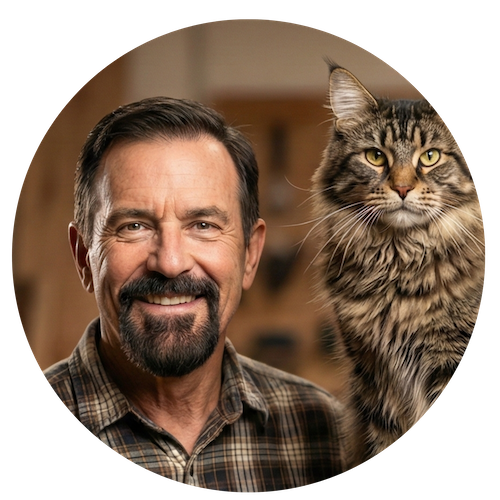
"Maine Coons expose every weakness in standard furniture — fast. For a heavy duty cat tree, I look for what I call 'over-engineered' joinery. That means threaded metal inserts and heavy-gauge bolts, not wood screws. If you're supporting a 20-lb cat in dynamic motion, the hardware has to be industrial-grade. I also won't approve anything with posts under four inches in diameter. That's the minimum to eliminate the sway that eventually strips the screws right out of the base plate."

Platform Scaling and "Sprawl" Space
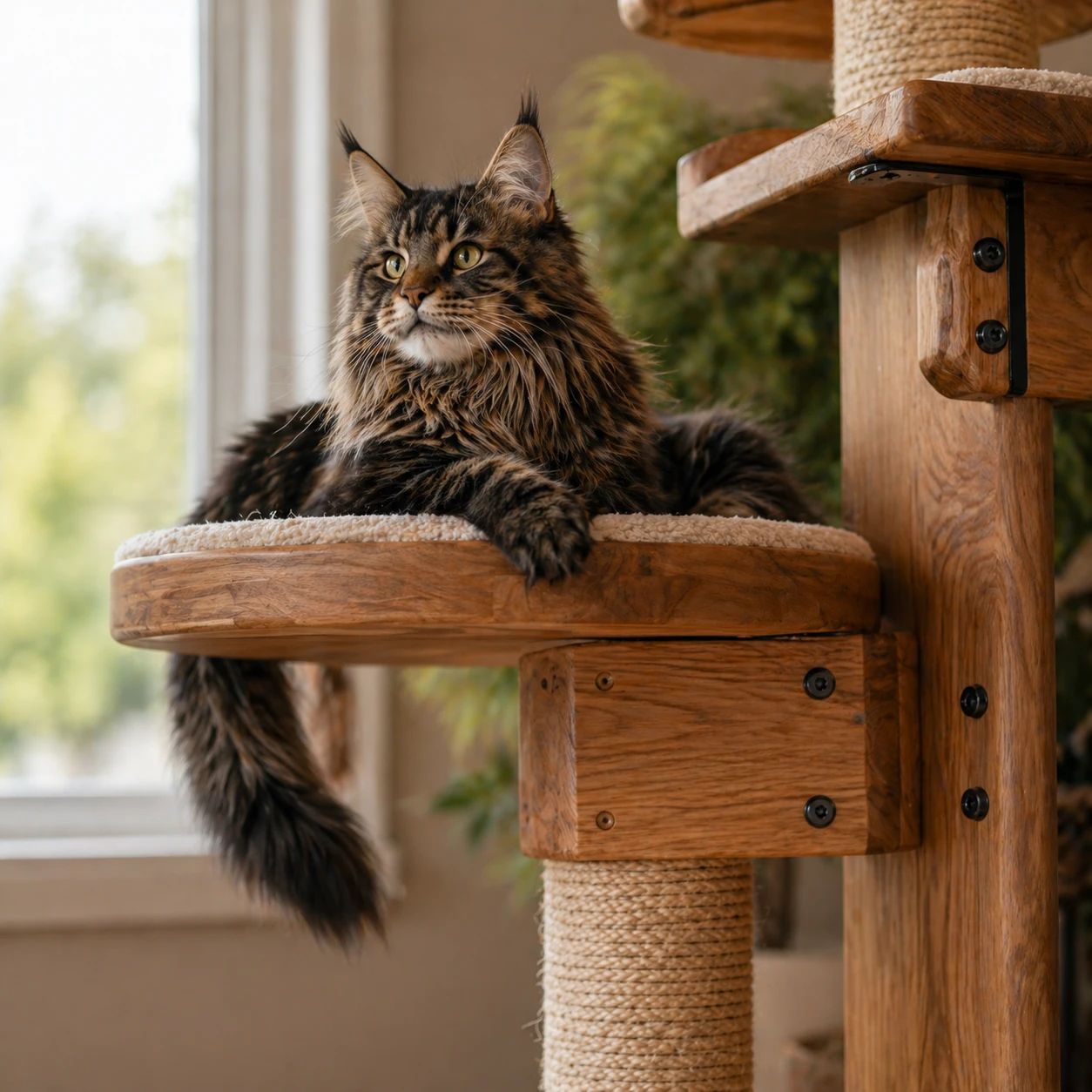
The second most common failure in a Maine Coon cat tree is perch size. Standard 12-inch circular platforms are too small for a large breed to turn around comfortably, let alone sleep. For these cats, the minimum is a rectangular platform or a jumbo U-shaped perch with at least 18 to 20 inches of horizontal clearance — enough for a full sprawl without limbs hanging off the edge, which creates joint strain over repeated use.
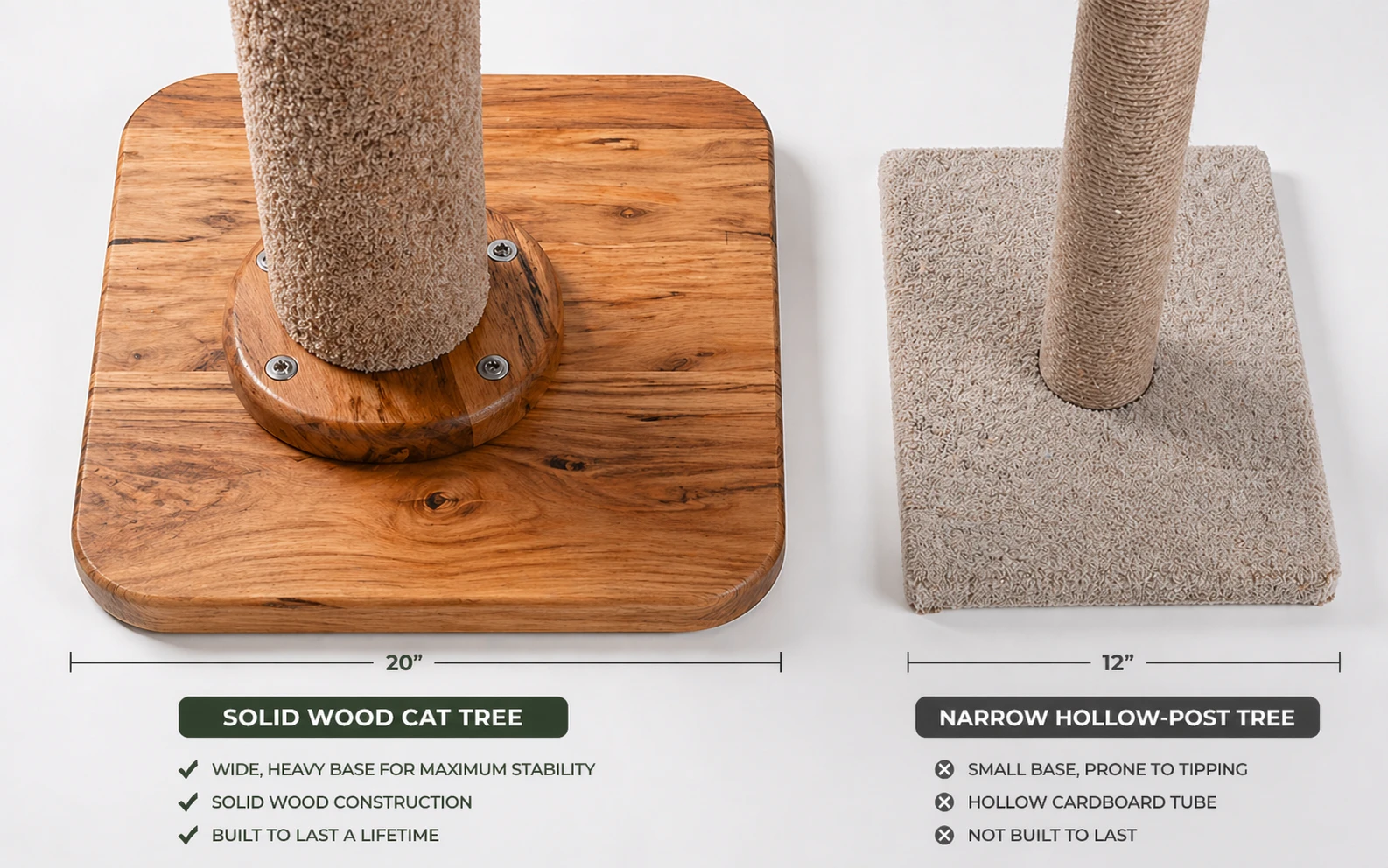
Close up of solid wood cat tree base versus narrow hollow-post tree base
Why Materials Matter: The Solid Wood Advantage
When searching for a large breed cat tree, natural materials aren't a luxury — they're structural. Solid wood cores provide the ballast that prevents tipping, but they also offer superior scratch resistance compared to thin faux-fur wrapped over cardboard. Maine Coon claws are substantial; lightweight coverings shred within weeks. Our Signature Collection uses furniture-grade carpet and heavy-duty sisal rated for the force these cats generate. For a deeper look at why construction quality determines longevity, see our guide on why solid wood cat trees outlast budget alternatives.
"Maine Coons are classic tree dwellers — they will always seek the highest stable point in a room. If their furniture moves or vibrates, they don't try it again. They relocate to your bookshelves, your refrigerator, your countertops. A rock-solid cat gym isn't just enrichment — it's the difference between a cat who has claimed safe, appropriate territory and one who hasn't. Stable furniture reduces territorial anxiety measurably. It changes the whole dynamic of a household."

Ready to shop? Browse our full collection of cat trees for large breeds -- solid wood construction, wide platforms, and bases that hold their ground under a 20-pound cat. Expert-curated and free shipping on everything.
If you want to understand why construction quality matters so much for large cats, Brian's breakdown of solid wood cat tree construction covers exactly what to look for in post diameter, base width, and joinery -- and why it matters more the bigger your cat is.