
Apr 12th 2026
Solid Wood Cat Trees: Why the Right Materials Make All the Difference.
Real wood, wide bases, and hardware that holds. What quality-first cat furniture actually looks like.
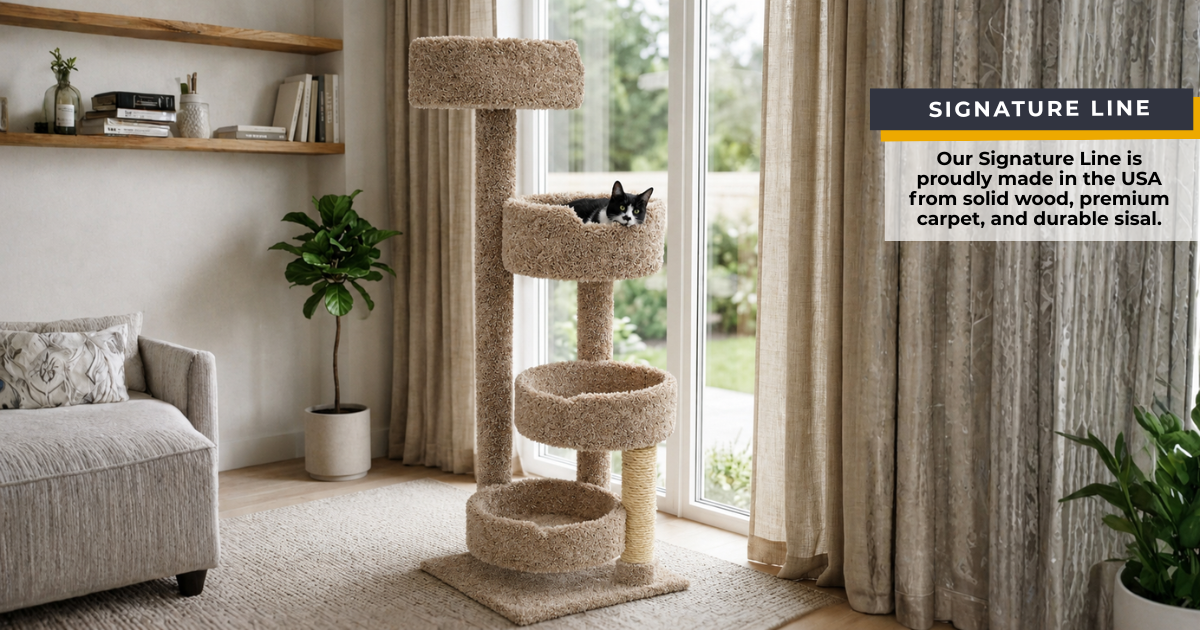
In 30 years of curating cat furniture, Brian has never had more customers ask specifically about materials before they buy — and that's exactly the right question to be asking. The difference between a cat tree that lasts a decade and one that wobbles within months comes down to what's inside the posts, under the platforms, and holding the hardware in place. Solid wood isn't a premium upgrade — it's the baseline that everything else should be measured against.
The Material Hierarchy: What Serious Builders Actually Use
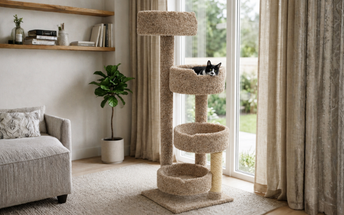
The real dividing line in cat furniture construction isn't between wood and "not wood" -- it's between materials that hold hardware under repeated stress and materials that don't. Solid wood and OSB (Oriented Strand Board) are on the right side of that line. Solid wood -- dense, consistent grain, used in structural posts and bases -- delivers the best hardware retention and the longest service life. OSB is a quality engineered wood: its cross-layered strand structure makes it stiffer than plywood and an excellent choice for platforms and load-bearing surfaces, which is why serious furniture builders rely on it. What doesn't hold up is particle board -- compressed wood chips and resin that progressively loses its grip on fasteners, especially under the repeated kinetic load of a cat that actually climbs. That's the tier our Premium I Signature Collection is built specifically to avoid -- and why our 7 Foot Royal Palace Cat Tower Gym remains one of the most structurally referenced pieces in our catalog.
"When I audit a cat tree for quality, I'm looking at two things: what the posts are made of and what's holding the hardware. Solid wood posts with a minimum 4-inch diameter and a 3/4-inch solid base -- that's where structural integrity starts. For platforms, OSB is a legitimate material choice; its engineered strand construction handles load and holds fasteners well, and it's what our Signature Line partner builds with. What I won't accept is particle board anywhere in a load-bearing role -- it looks fine on day one and fails quietly over months. The customers who ask about materials before they ask about price are the ones who never have to buy a second cat tree. That's the buyer we build for."

Engineering a Cat Tree That Won't Wobble
Stability is determined by the center of gravity and the width of the base. A heavy duty cat tree must feature a base footprint of at least 24 inches by 24 inches to prevent lateral tipping during an aggressive leap. Natural materials like those in our Premium III Cedar Collection provide a natural wood cat tree aesthetic that is also rot-resistant and structurally superior to hollow-core towers. This weight ensures the unit remains stationary on both hard floors and carpeted surfaces. The 75" Cathedral XXL Giant Cat Tower Gym is a strong example — at this height, base engineering is everything.
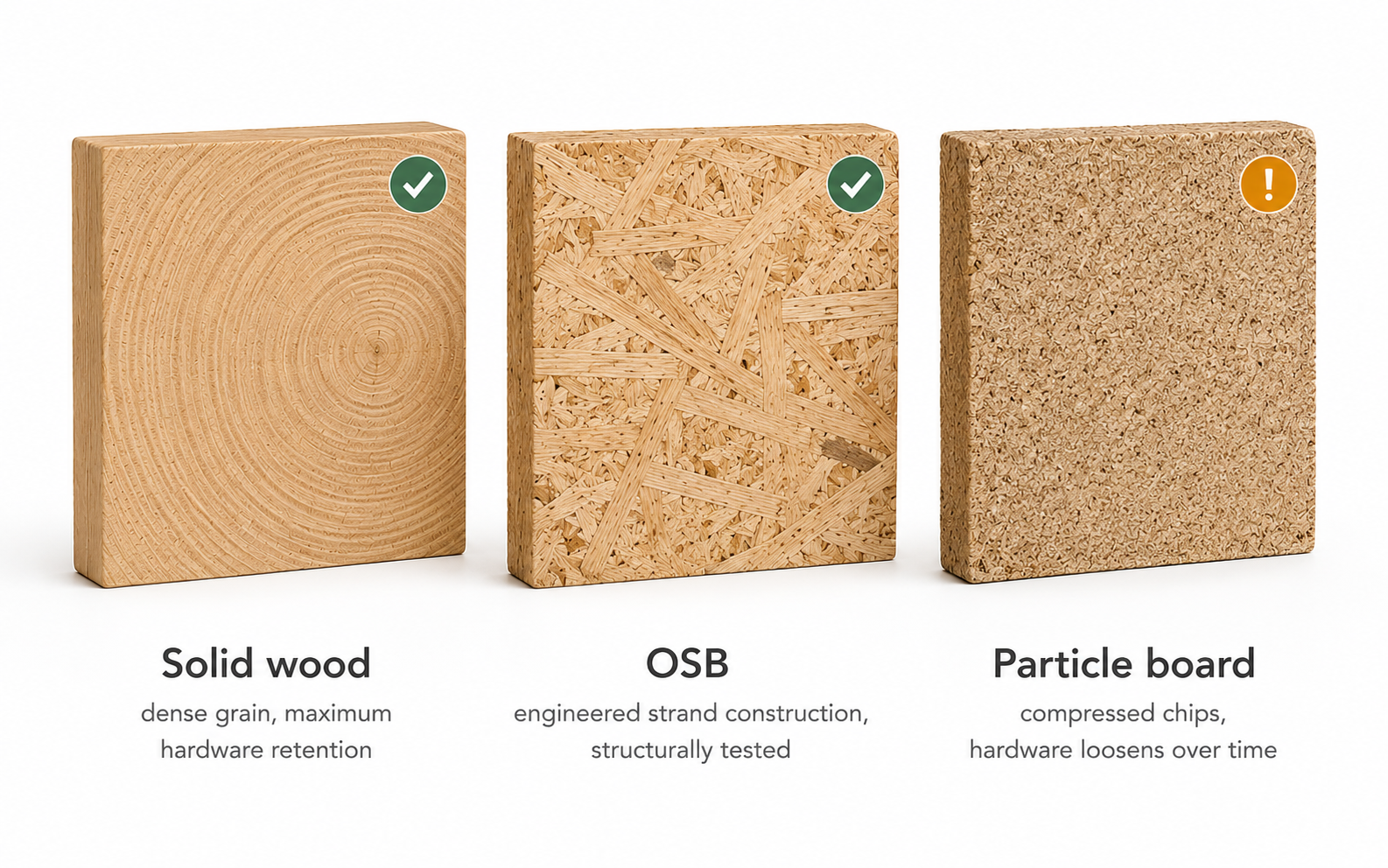
The right materials in the right places -- that's the whole game.
Hardware and Joinery: The Final Check
The defining factor in construction quality is often the connection point where the post meets the platform. We prioritize recessed industrial bolts that allow for maximum torque without compromising the surface of the wood. This creates a "monolithic" structure that won't loosen over time. The 7 Foot Giant Tree House Cat Gym meets this standard at every connection point — one of the most structurally reviewed pieces in our lineup. When choosing your next vertical territory, remember that the initial investment in quality materials prevents the frequent replacement cycles common with lower-tier particle board units. By matching the architecture to your cat's energy level, you create a permanent sanctuary that functions as a true piece of household furniture.
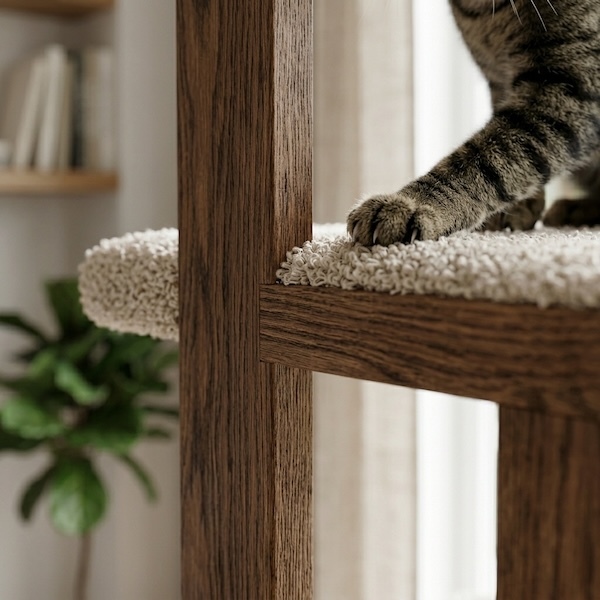
You'll find our full selection of solid wood cat trees and solid wood cat gyms in the catalog — every piece meets the material standards described above. If you're specifically shopping for a large or heavy breed, structural integrity standards for large cat towers takes the material conversation a step further into engineering specifics — and special considerations for big breed cat furniture covers the ergonomic factors that go beyond construction quality alone.