
Jun 20th 2026
How to Introduce New Cat Furniture So Your Cat Uses It
Your cat isn't ignoring the new tree because it's picky. It's ignoring it because new objects register as threats until proven otherwise.
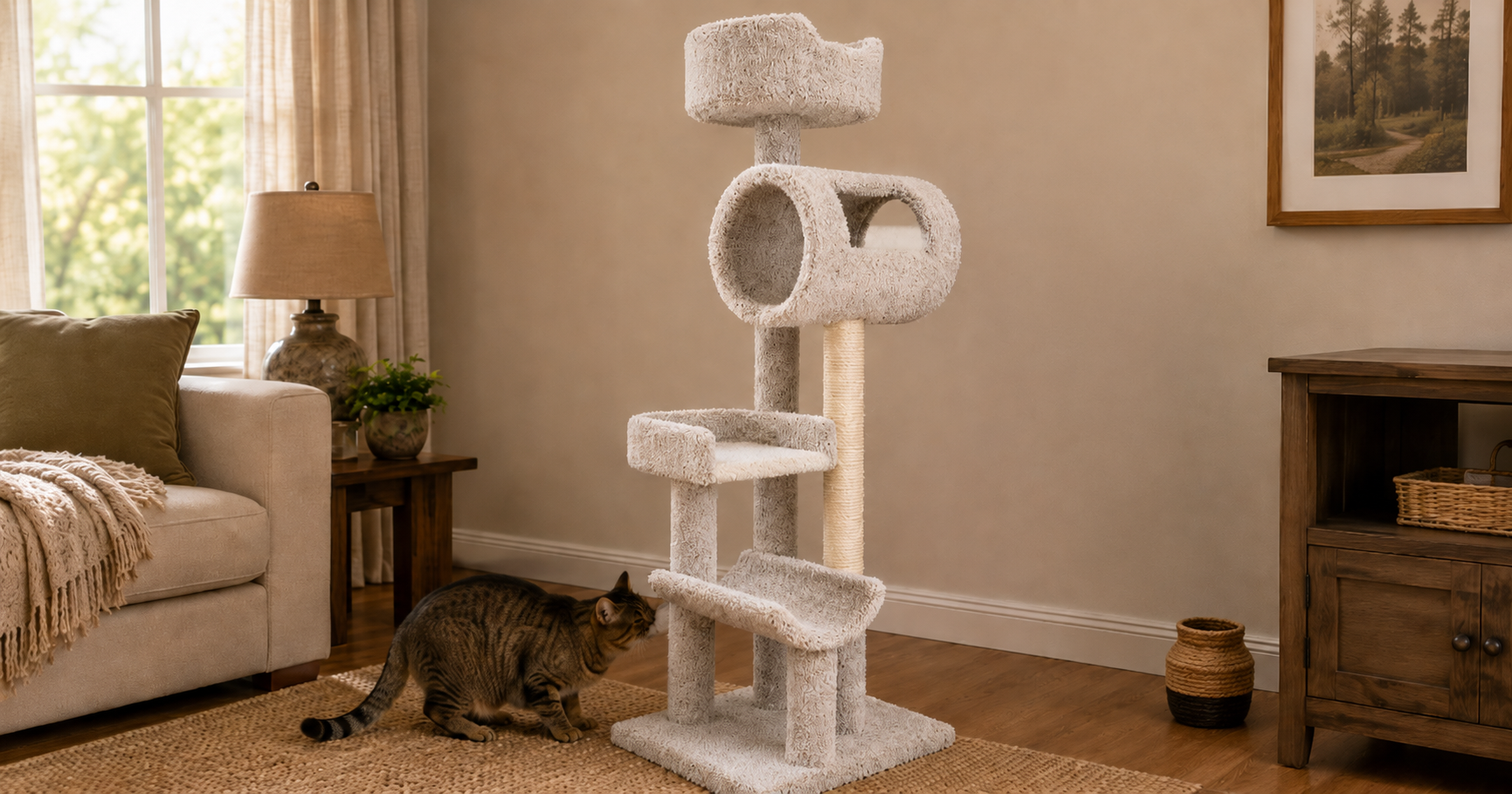
Your cat isn't ignoring the new tree because it's picky. New objects register as potential threats until proven otherwise -- that's not a character flaw, it's a survival instinct. Understanding that one fact changes how you introduce anything new, and it explains why the furniture you put in the corner and walked away from never got used. The cat trees section has the right piece -- this post covers what to do once it arrives.
Why Cats Ignore New Furniture (It Is Not What You Think)
Cats are neophobic by nature -- wary of new things until they have gathered enough information to decide something is safe. A new cat tree arrives carrying unfamiliar scents, sitting in a space the cat did not choose, looking nothing like anything already in the environment. From the cat's perspective, caution is the correct response.
The mistake most people make is placing the furniture and waiting. Waiting reads to the cat as confirmation that the object is just there, not connected to anything good. What works instead is actively linking the new piece to things the cat already associates with safety and reward -- their own scent, their favorite food, the people they trust.
"The single biggest thing I tell people is: don't put it in a corner and leave. Cats investigate on their own timeline, but they investigate faster when something good is already associated with the new object. Rub a soft cloth on your cat's cheeks -- that's where their scent glands are -- and wipe it on the new tree before they ever approach it. Now it already smells like them. That one step cuts the investigation period in half for most cats. After that, food does the rest. A few treats on each platform and the cat is problem-solving, not threat-assessing."

Scent First, Then Placement
Start before the furniture arrives if you can. Rubbing a cloth on your cat's cheeks and face -- where scent glands are concentrated -- and wiping it on the new piece before it comes in the door gives the cat something familiar to find when they first approach it. If that window has passed, do it on day one.
Placement matters more than most people expect. Putting a cat tree in an isolated corner asks the cat to investigate alone, away from household activity. Cats feel safer exploring near people they trust. Start the tree near where the cat already spends time -- a spot with a sightline to the room -- and move it later once they have claimed it.
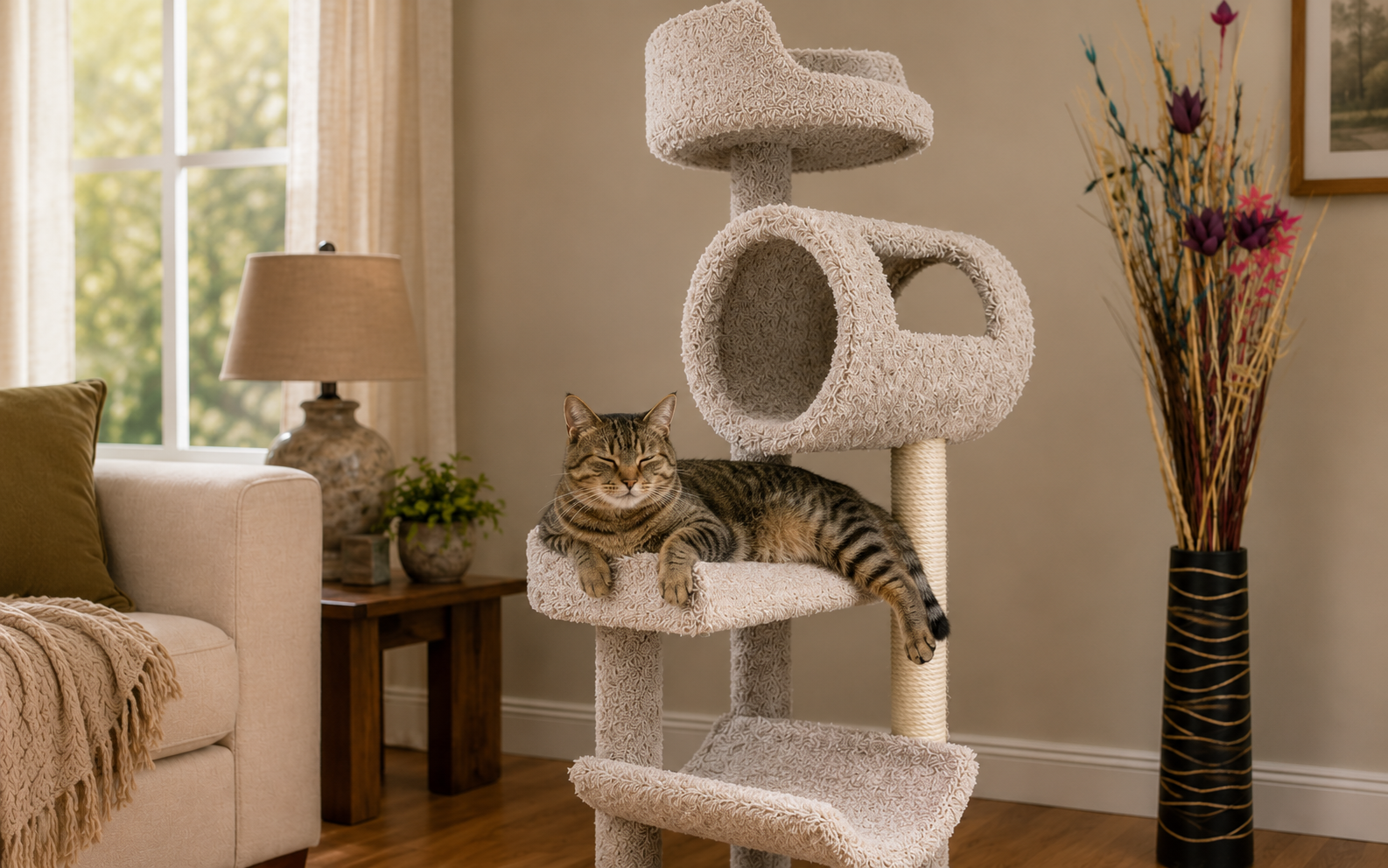
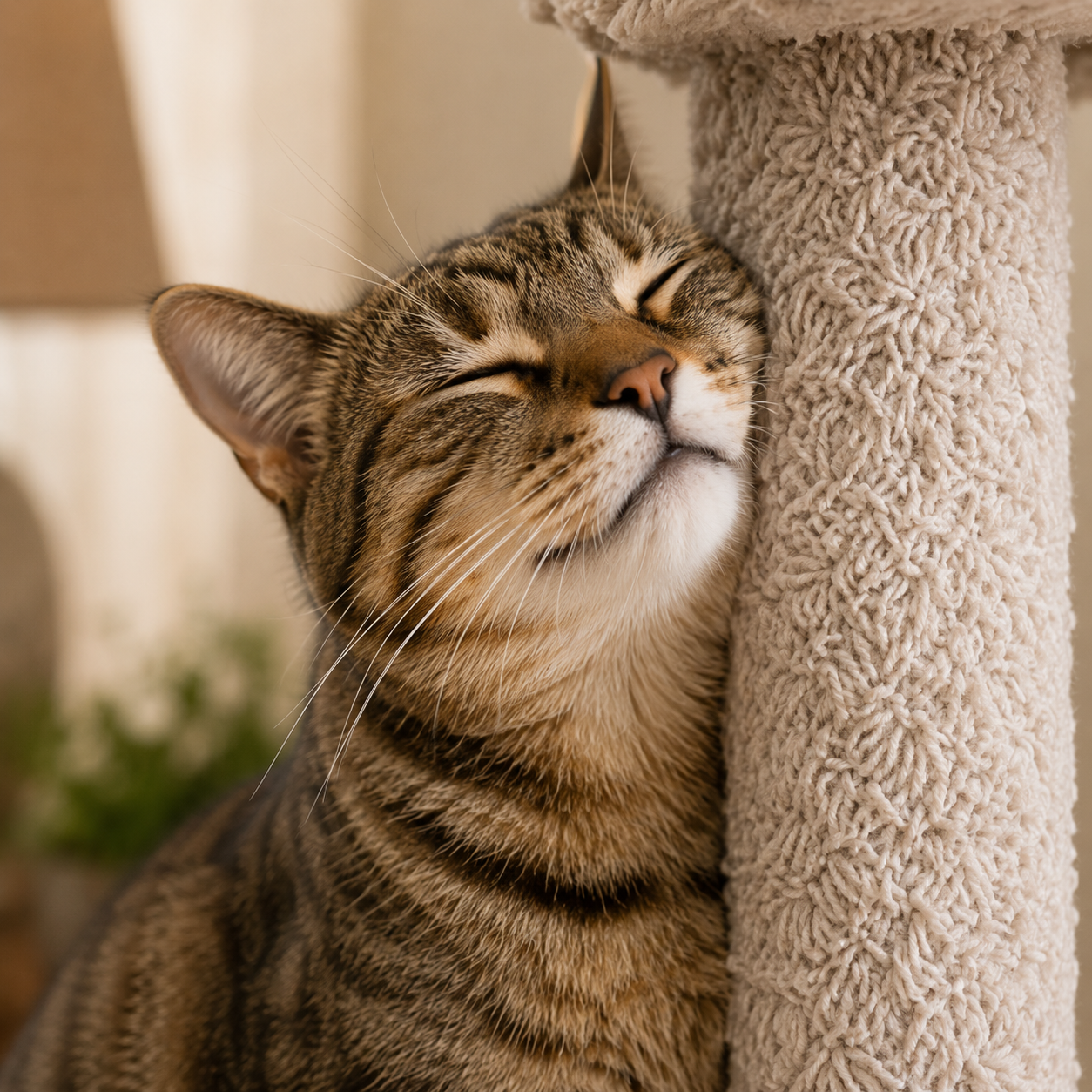
A cat that has claimed its tree looks like this -- relaxed, settled, unhurried. Getting here takes days, not hours, and that is completely normal.
Play, Treats, and Patience: The Introduction Sequence
Treats and play are the fastest way to build a positive association. A few pieces of food placed on each level draws the cat up without pressure -- they are solving a problem, not being asked to trust something unknown. Interactive play near the base, then moving the toy up onto the platforms, connects the furniture to something the cat actively enjoys. If you are still choosing a tree, the Cat's Choice 30" Window Perch Tree and the Cat's Choice Triple Level Corner Tree are both stable choices that a cautious first-timer will not get a wobble on approach.
Most cats complete the transition within one to two weeks if the introduction is active rather than passive. Some take longer -- a cat who has had a bad experience with unstable furniture will need more time to trust that this one holds. Patience here is not failure. It is the process working at the cat's pace rather than yours.

"Something I have noticed over the years is that the trees cats adopt fastest tend to be the ones that do not wobble. It sounds obvious, but a cat that approaches a new tree, puts a paw on it, and feels it shift has just had its threat assessment confirmed. That cat is not coming back quickly. Stability is not just a quality feature -- it is a behavioral one. When I am curating trees, I am always thinking about whether the base is wide enough and heavy enough to hold firm under a full-speed jump from across the room. That is the real test."

If the furniture you are introducing is a scratcher, why cats scratch the couch explains the format choices that make the difference -- and if you are also introducing a litter box enclosure, our guide to setting up a litter box enclosure covers the placement and transition details that determine whether your cat accepts it.