
Jun 20th 2026
How to Set Up a Litter Box Enclosure a Cat Will Actually Use
The setup details the furniture listing never mentions -- and the ones that actually matter.
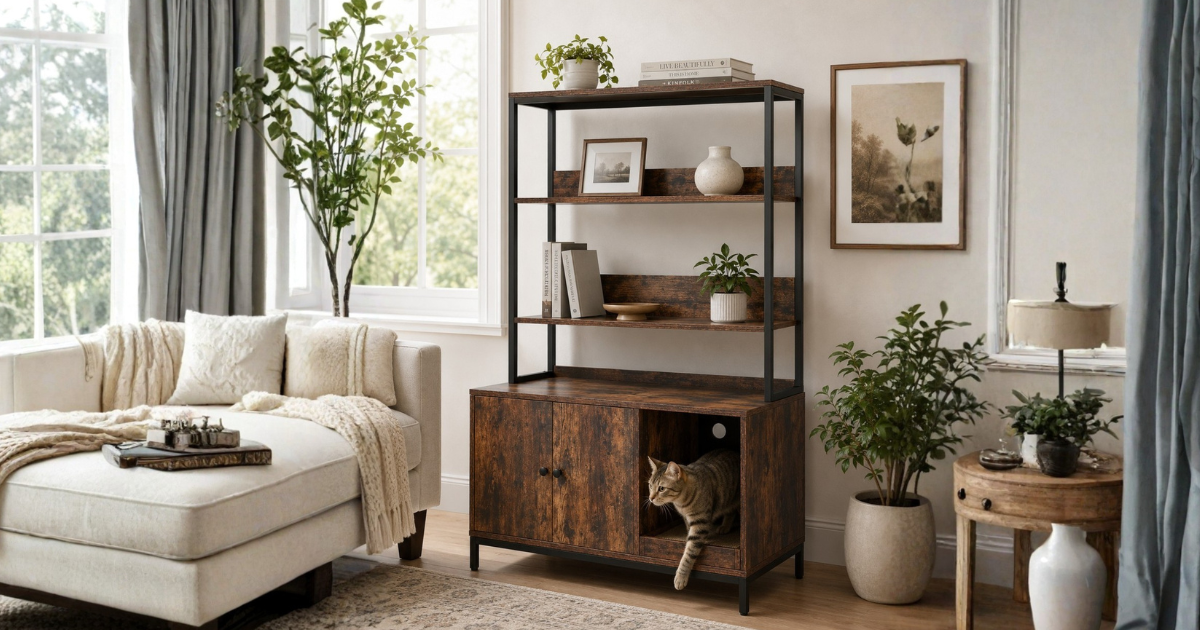
You bought the litter box cabinet, set it up in the bathroom corner, and your cat sniffed the outside and has not gone near it since. The litter box inside is still the one they were using before -- sitting out in the open because you are not ready to force the issue. The cabinet is not the problem. The setup is.
Why Cats Reject Litter Furniture (And Why It Is Rarely the Furniture)
Cats do not skip a litter box hider because they prefer open-air toileting. They skip it because something about the placement violates the basic conditions they need to feel safe using a litter box -- and they have no way to tell you which condition it is.
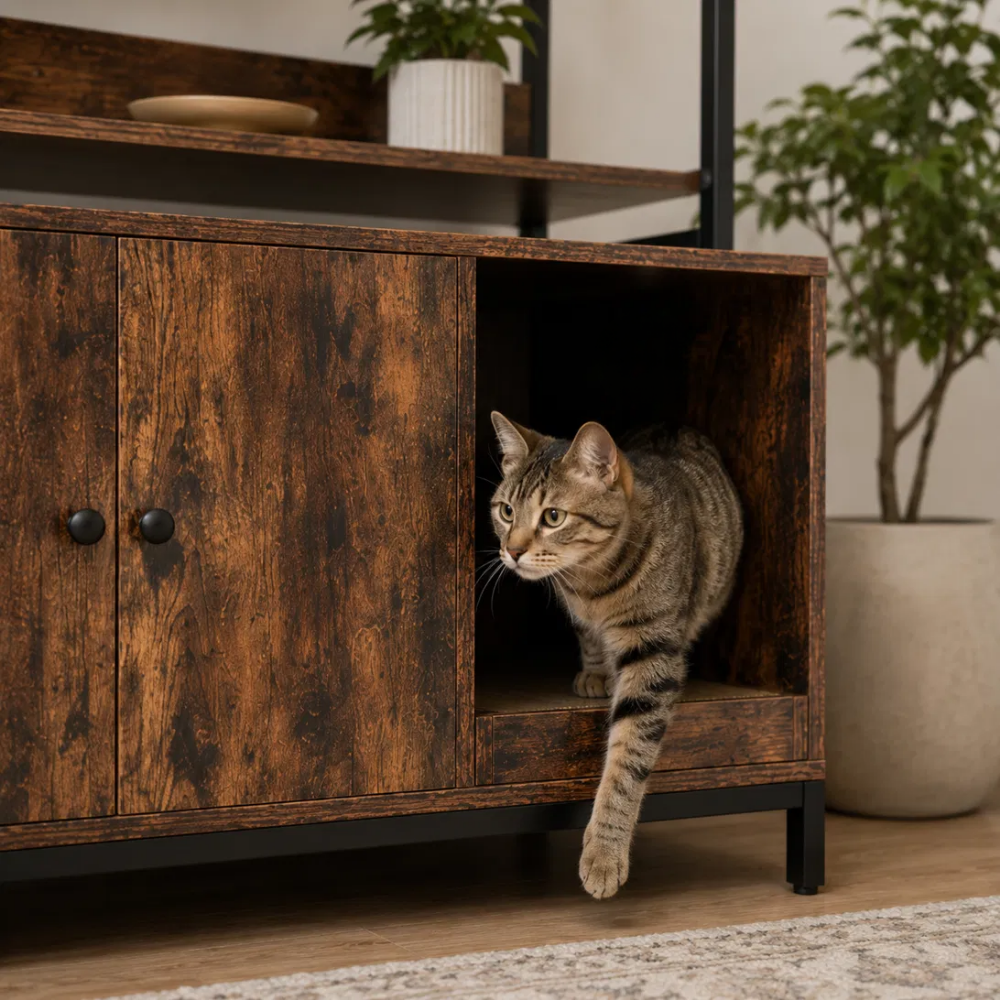
The most common problem is entry direction. A litter cover placed with the opening facing a wall means a cat has to put its back to the room to get in. That is not a posture any cat will hold in a vulnerable moment. The cat is not being difficult -- it is being a cat. Our litter box furniture collection includes side, front, and top entry options specifically because this is a real variable.
"The most common setup mistake I see is a litter cabinet tucked into a corner with the opening facing the wall. The cat has to back in or enter with its back exposed to the room -- neither of which feels safe. Entry should always face outward, toward open space. If a cat can see the room from inside the box, it will use the box. If it cannot, it will find somewhere else."

Four Rules That Determine Whether Your Cat Uses It
Entry direction first -- opening faces the room, not a wall or door. Second, distance from food -- six feet minimum, more is better. Third, ventilation -- a litter hider with no airflow concentrates odor fast, and a cat will avoid a box that smells dense before it even enters. Leave a gap at the back or choose a model with a ventilation panel.
Fourth is traffic. The cat needs to approach and exit without being cornered by a door swing or another pet. The Double Barn Door Litter Cabinet and the Industrial Litter Cabinet with Open Shelves both have side-entry designs that make this easier to position correctly in most rooms.
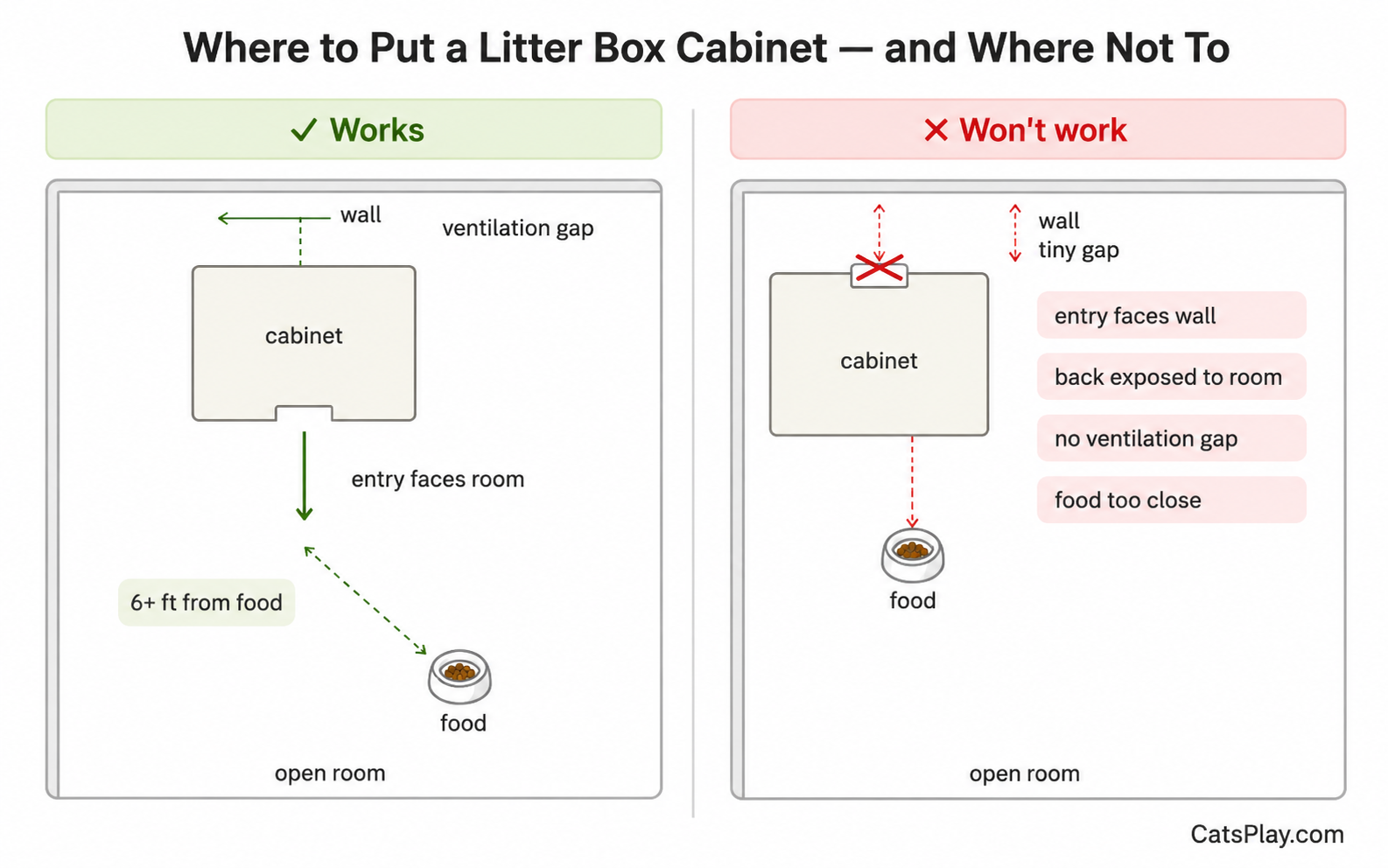
Placement determines whether a cat uses a litter box cabinet consistently -- more than the style, size, or price of the piece.
The Transition -- How Long It Actually Takes
Most cats need three to seven days to accept a new litterbox cover, assuming the placement is right. Keep the old open box accessible during that window. Removing it too early turns a transition into a forced change, and forced litter box changes are how cats find alternatives you will like significantly less.
If your cat is still avoiding the covered box after a week, check the litter itself. Some cats reject the same litter inside a cabinet because scent concentrates differently in an enclosed space. Switching to unscented, low-dust litter often resolves this without changing the placement. Browse the full litter box furniture range -- each piece is reviewed for interior clearance, entry design, and ventilation before it makes the catalog.

"Interior clearance is the first thing I check -- before price, before finish, before anything else. A cat needs room to enter, turn around fully, and exit without touching the walls. If the interior dimensions do not give a larger cat that space, the piece will not be used regardless of how well it is placed. The litter cabinets I approve for the catalog have interiors sized for the cats people actually have, not the cats the product photographer used."

If you are setting up for a new cat, our guide to cat furniture for kittens covers what to buy first -- and for cats who are also targeting your furniture, why cats scratch the couch explains the behavior and what format actually fixes it.