

Apr 27th 2026
Do Cat Trees Need to Be Tall? How to Choose the Right Height
Height matched to your ceiling, your cat, and how they actually climb.
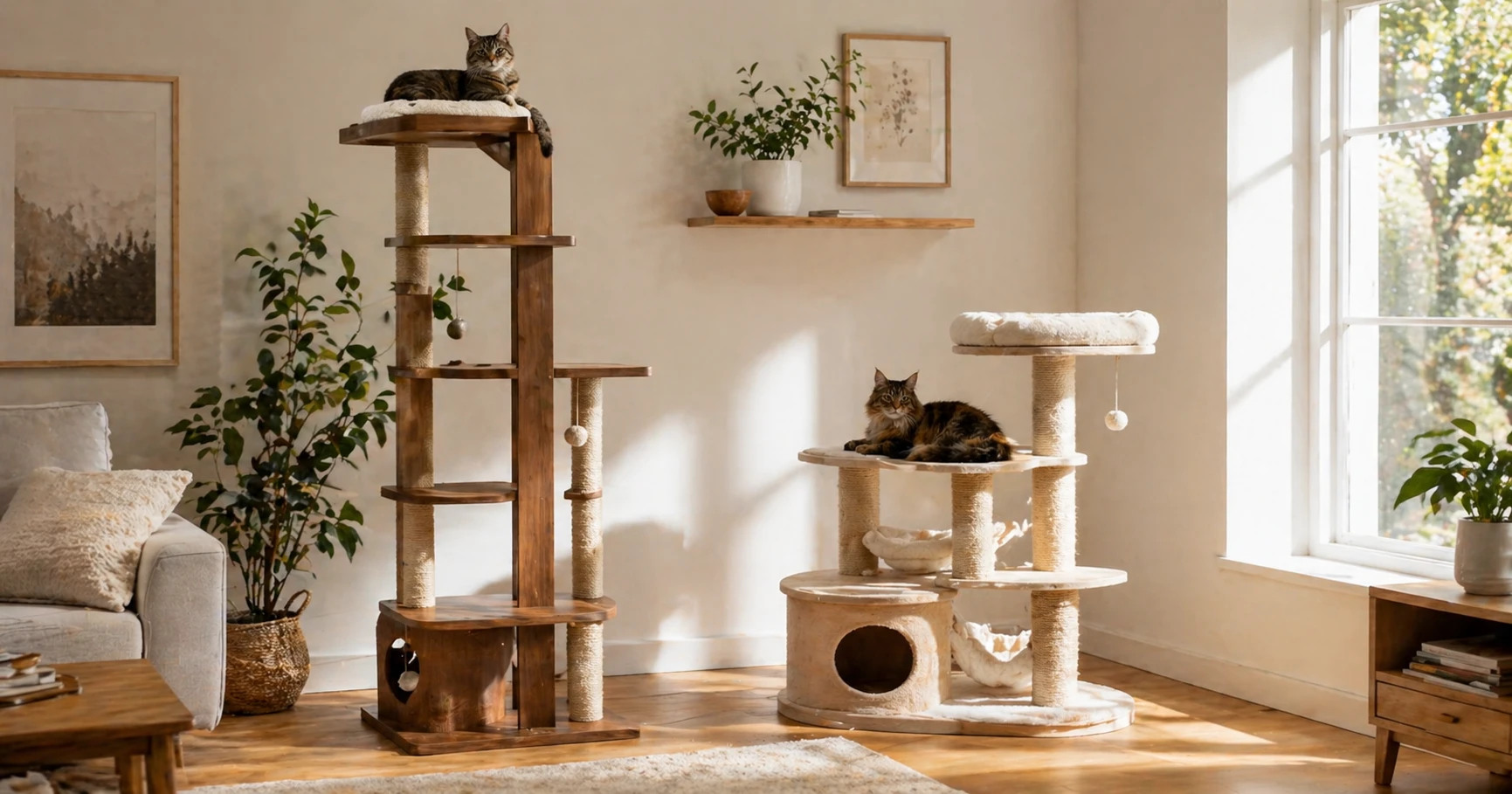
Taller feels better when you are standing in a showroom or scrolling through product pages -- it reads as more impressive, more substantial, more worth the money. But the right height for a cat tree is not the tallest one that fits in the room. It is the one matched to your ceiling clearance, your cat's age and mobility, and how your cat actually moves through space -- and those three things will not always point you toward the tallest option on the page.
Ceiling Clearance: The Measurement Most People Skip
A cat tree that brings the top perch within 12 inches of the ceiling is a problem waiting to happen. Cats use the top perch as a launch point as much as a resting spot, and a cat that cannot fully stand, turn, or crouch to spring from the top platform will either avoid it entirely or use it awkwardly. The practical rule: the top perch should sit at least 18 inches below the ceiling -- 24 inches in rooms with low beams or built-ins that reduce usable overhead clearance.
This matters more than most buyers expect because manufacturers measure total product height, not usable perch height. A 72-inch tree does not put a perch at 72 inches -- it puts the top surface somewhere below that, depending on the perch thickness and base design. Always confirm the top perch height specifically, and measure your actual ceiling rather than assuming standard height. Our cat gym pages list top perch heights in the specifications -- look for that number before anything else.

"The taller the tree, the more the base matters -- and most people do not think about this until the tree is already swaying. A 72-inch structure with a 16-inch base is an engineering problem. I want to see a base that is at least one-third the total height of the tree, and I want the base weighted or anchored, not just wide. For anything over 60 inches, I also look at the post diameter -- a 4-inch sisal post is meaningfully more stable than a 3-inch one, and that difference compounds as you add height. Tall is fine. Tall and narrow with a small base is not fine."

When a Shorter Tree Is the Right Answer
A multi-level cat tree in the 48-to-58-inch range is often a better choice than a 72-inch tower -- not because it is cheaper, but because the platform spacing is more useful. Taller trees with the same number of platforms spread them further apart vertically, which can create jumps that are too demanding for older cats, heavier cats, or cats who have never been particularly athletic. A shorter tree with the same number of platforms at tighter intervals gives a cat more options for how it moves up and down.
Wide and sturdy also outperforms tall and narrow for cats over 15 pounds. A large breed cat that can sprawl across a generous mid-level platform and is not required to commit to a challenging summit is a cat that will actually use the tree daily rather than occasionally. If your cat has started avoiding the top of its current tree, height is often the reason -- and the solution is usually not a taller replacement but a more thoughtfully proportioned one. Browse the full cat tree collection filtered by height to find the right range for your space.
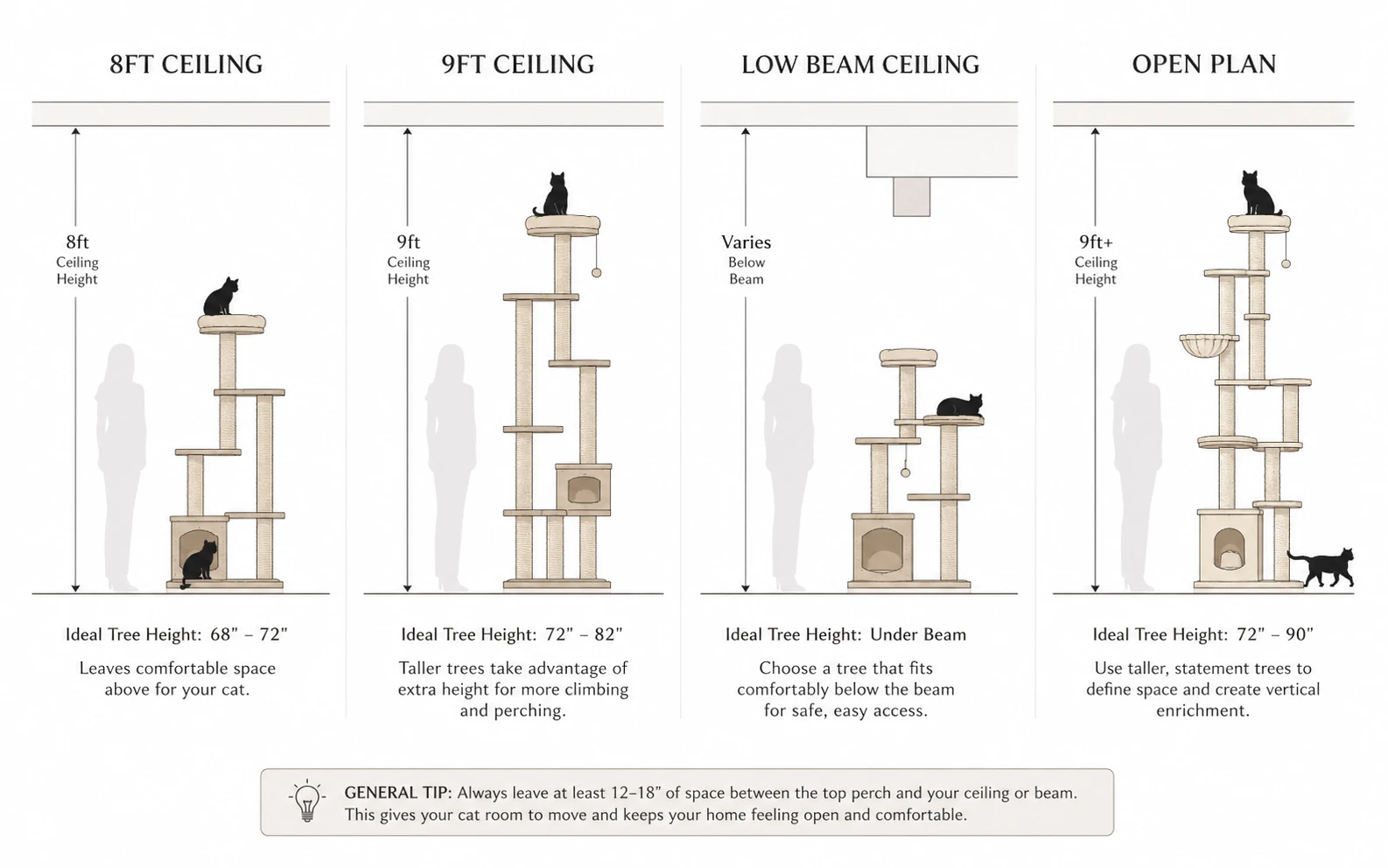
Ceiling height determines the upper limit. Your cat's mobility determines the right range within it.
Matching Height to How Your Cat Actually Climbs
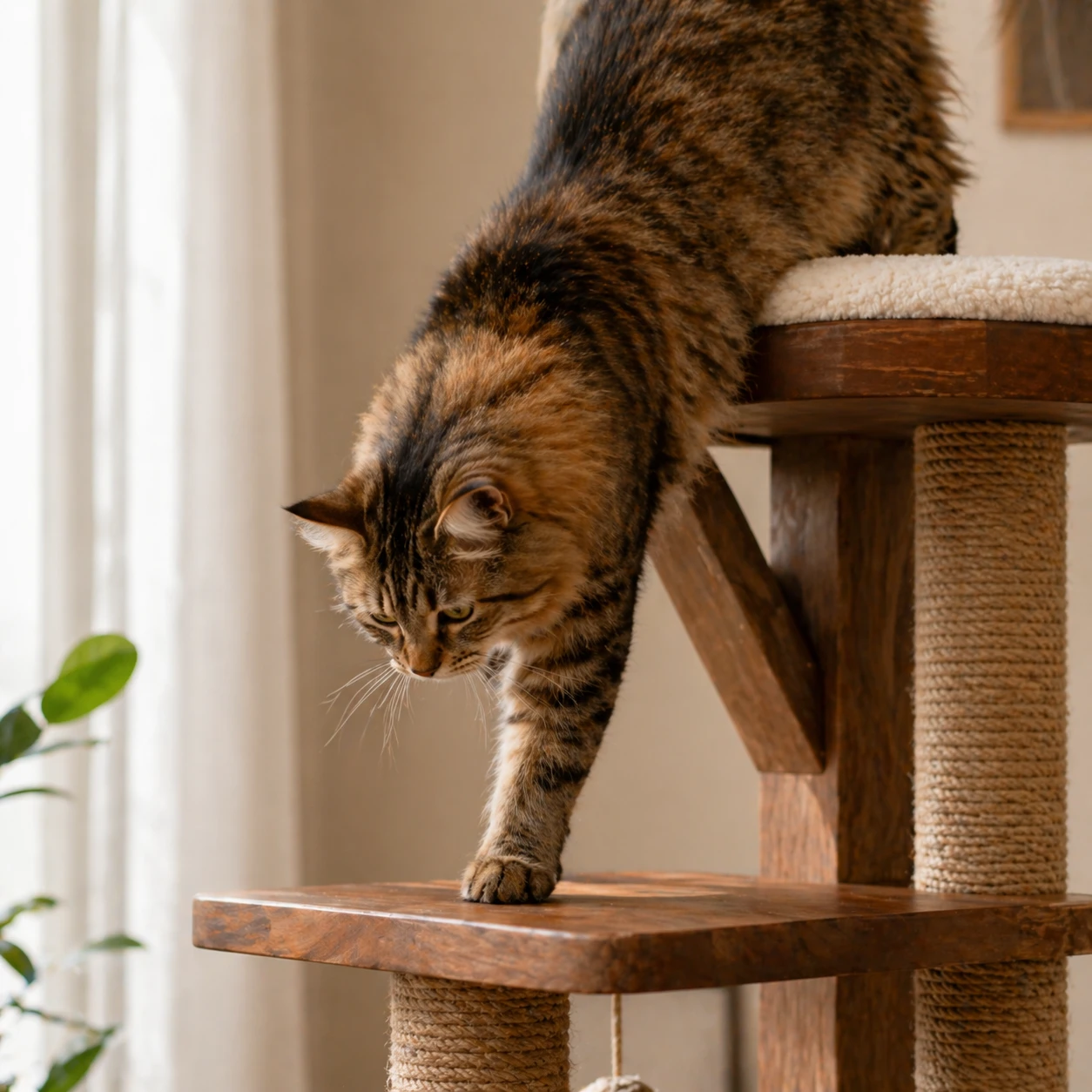
A young, athletic cat in good health will use a 72-inch gym confidently -- the height is a feature, not a barrier. But the same tree becomes a problem for a cat over eight years old, a cat recovering from injury, or a cat that has always been a cautious climber. The issue is not the top perch -- it is the intervals between platforms and the angle of any ramps or steps in the design. Steep jumps between levels that felt natural at three years old become hesitation points at nine, and a cat that hesitates will eventually stop trying.
For older cats or cats with mobility considerations, cat steps alongside a mid-height tree is often the most practical combination -- the steps provide graduated access to the lower and mid levels, and the tree does not need to reach the ceiling to give the cat meaningful altitude. The goal is a cat that uses the furniture confidently, not one that looks at the top platform from the floor and decides against it.
"What I watch for is hesitation. A cat that approaches a platform, looks up, and then walks away has just told you the jump is too much. Most owners read that as the cat being uninterested -- but the cat was interested, it just did a quick cost-benefit calculation and decided the effort was not worth the reward. When that starts happening regularly, the tree has outgrown the cat, not the other way around. A shorter tree with closer platform spacing will get used every day. A taller one that asks for more than the cat can comfortably give will sit empty."

Shop by height and build: Browse cat trees and cat gyms -- every option listed with dimensions, so you can match height to your ceiling, your cat's age, and how they actually climb. Free shipping on everything.
Height matters differently depending on your cat's breed and size. If you have a Maine Coon or other large breed, Brian's deep dive on why Maine Coons need a different kind of cat tree covers how breed-specific sizing interacts with height, platform width, and base stability to make a real difference in daily use.