Sep 1st 2026
Best Top Entry Litter Box vs. Side-Entry: Which Wins?
Sarah's side-by-side guide to top-entry vs. side-entry litter boxes -- and which one actually fits your cat, not just the trend.
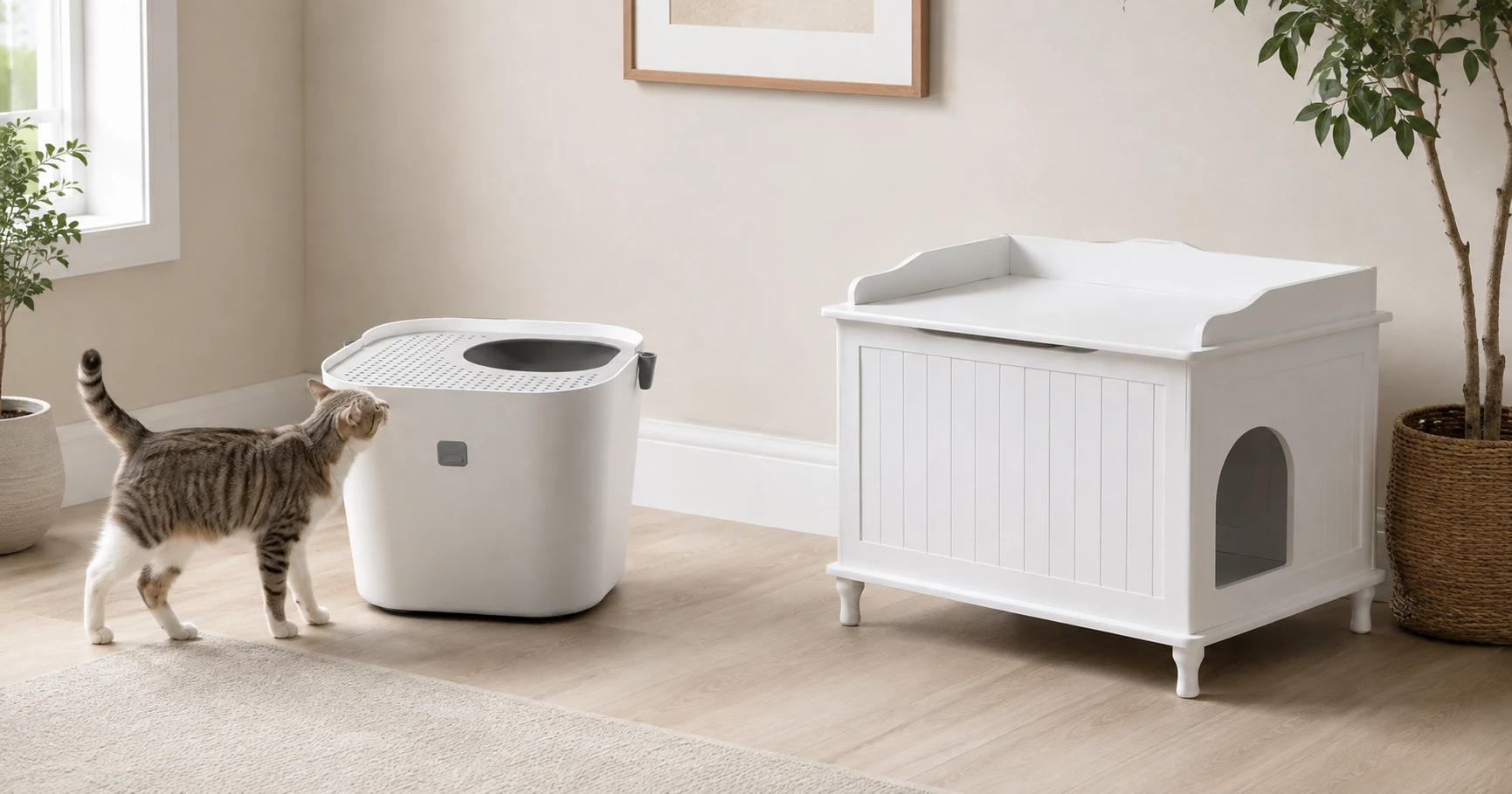
You've swept the same trail of litter off the kitchen floor three times this week, and somewhere online a roundup told you which is the best top entry litter box to fix it. It might. It also might not be the right box for your specific cat, and that difference matters more than the ranking lets on.
Why Litter Ends Up on the Floor No Matter What You Buy
Litter tracking isn't really about which box you buy. It's about how many steps happen between the litter and clean floor, and how much of that litter is still stuck to a paw when your cat takes them.
A side-entry box with no threshold lets a cat walk straight out, litter and all. Whether a top-entry box actually solves that, or just moves the problem, is worth understanding before you buy one on a stranger's recommendation -- our guide to setting up a litter box enclosure a cat will actually use covers the daily-use side of this same decision.

"Tracking isn't about which box you buy, it's about how many steps happen between the litter and clean floor. A side-entry box with no barrier lets a cat walk straight out with litter still stuck to its paws. A top-entry box forces a real climb on the way out, and that motion knocks a lot of it loose before your cat's feet ever touch your floor. That's the actual mechanical difference -- not that one box is nicer, but that one makes the cat do more work to shed the litter before it becomes your problem again."

So What Actually Makes the Best Top Entry Litter Box?
A genuine top-entry design asks more of a cat than a side-entry box does. It requires a real vertical jump in and a real vertical jump out, interior space tall enough to turn around comfortably, and a household willing to lift the lid to check the litter level, since you can't eyeball it the way you can through an open front door.
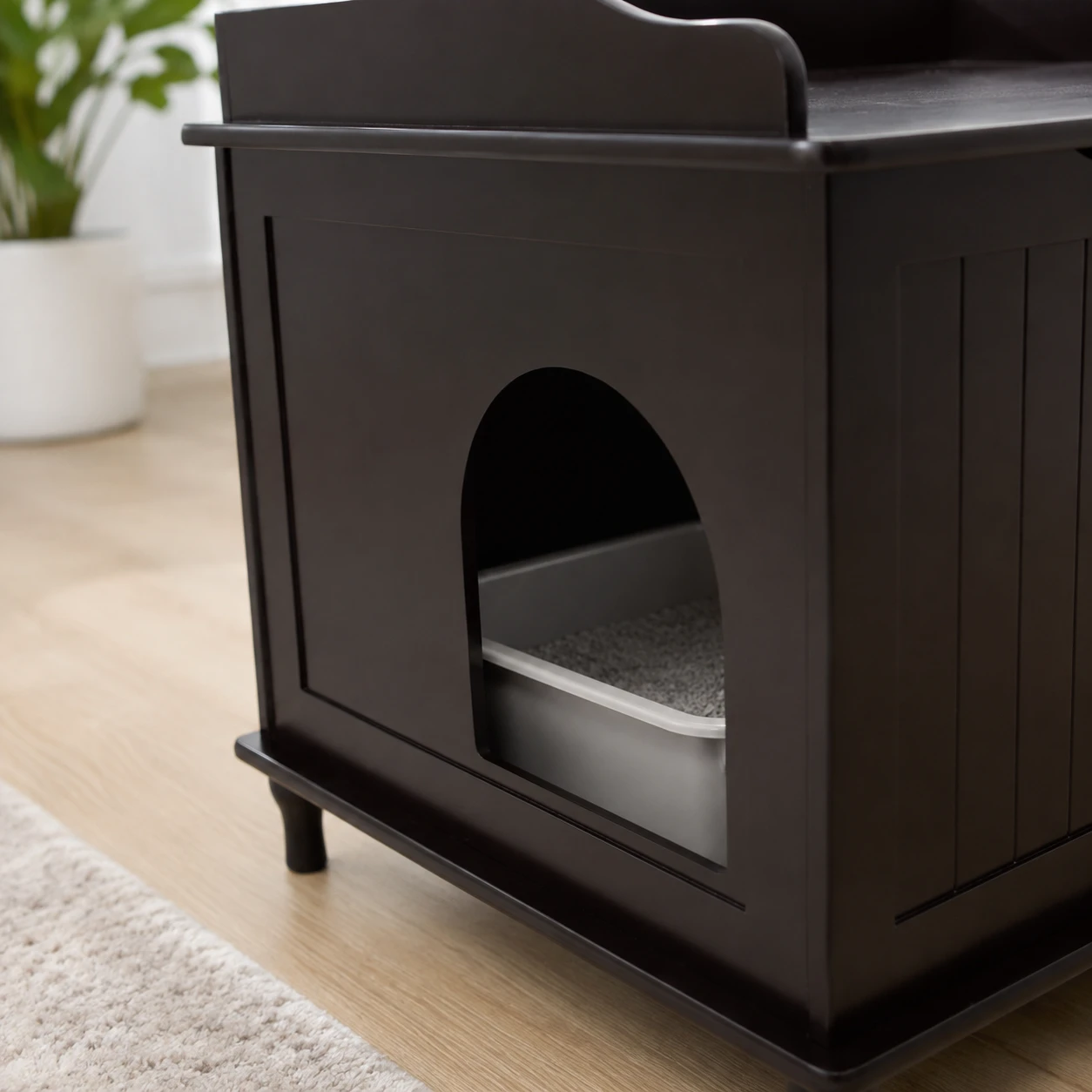
The best top entry litter box for one cat might be the wrong choice for another, and the format alone doesn't decide that -- age, mobility, and household size do. For anyone who wants the concealment without the climb, our furniture-style litter box enclosures solve for privacy from a different angle entirely.
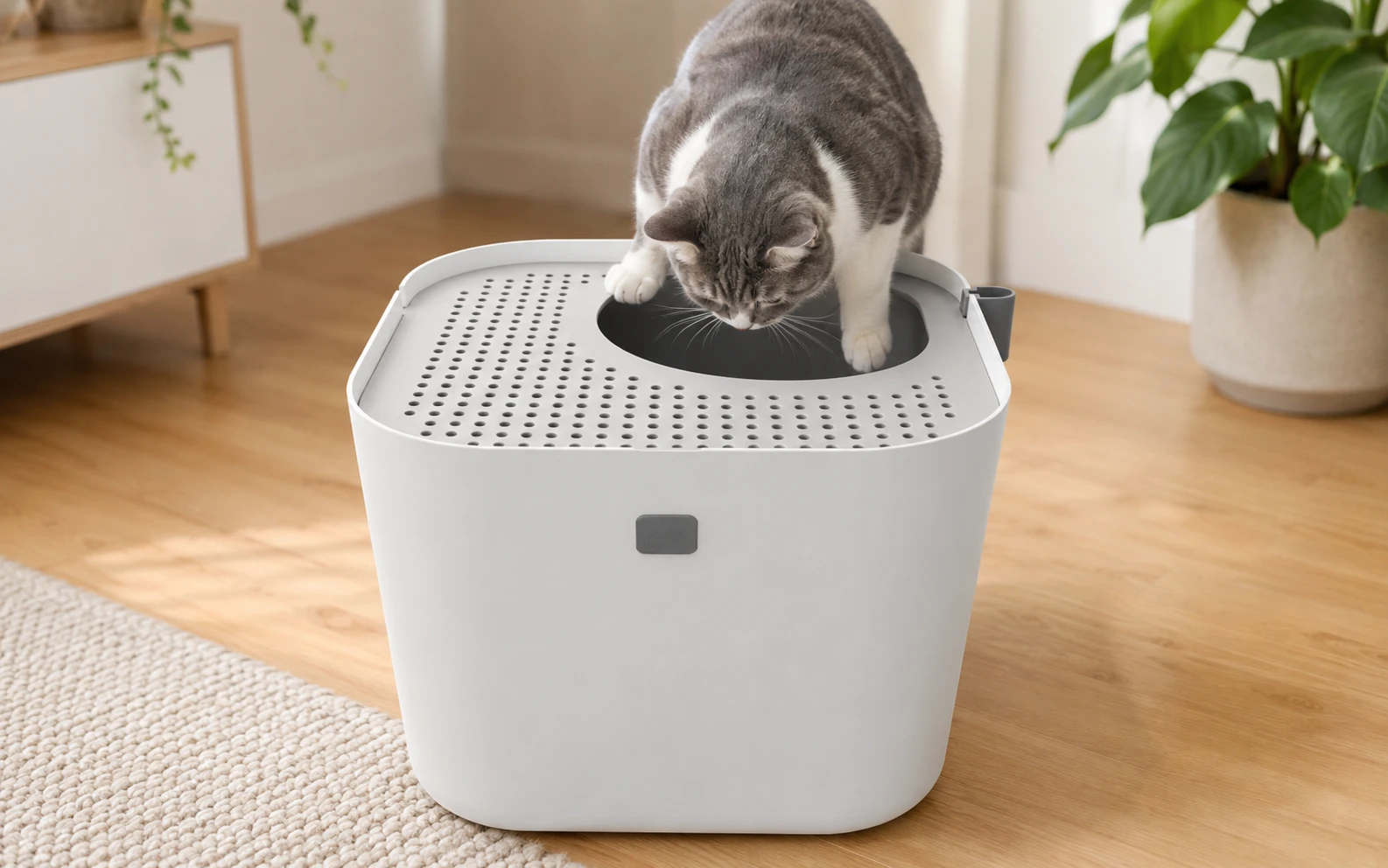
The climb itself is what knocks litter loose -- and what makes this format wrong for some cats.
Which One Actually Fits Your Cat
A senior cat, an arthritic cat, or a very young kitten should not be doing a vertical jump twice a day just to use the bathroom. If that describes your cat, a side-entry or furniture-style enclosure is the right call, full stop -- our guide to joint health and mobility support for senior cats goes further into what else changes as a cat ages.
For a large-breed cat, check interior dimensions before assuming top-entry will work at all -- some openings are sized for an average cat, not a Maine Coon. In multi-cat households without any mobility concerns, top-entry earns its reputation: there's no single low doorway for a dominant cat to guard, which side-entry boxes don't solve nearly as well.

"The complaint I hear most about top-entry boxes isn't about the cat, it's the lid. If it's heavy or the hinge is stiff, cleaning turns into a two-handed wrestling match every day, and that's when people quietly go back to a side-entry box instead. On a side-entry design you can glance in and see the litter level. On a top-entry box you can't -- you have to lift the lid to check, which means it's easy to let it run lower than you'd catch on an open box. Neither format is inherently better built. It comes down to whether the specific box makes daily maintenance easier or harder, and that's a spec question, not a marketing one."