Sep 1st 2026
Carpet Cat Scratching Post vs Sisal: Which Lasts?
Brian's material audit of sisal vs. carpet -- which one actually survives daily use, and which one just looks good in the listing photo.
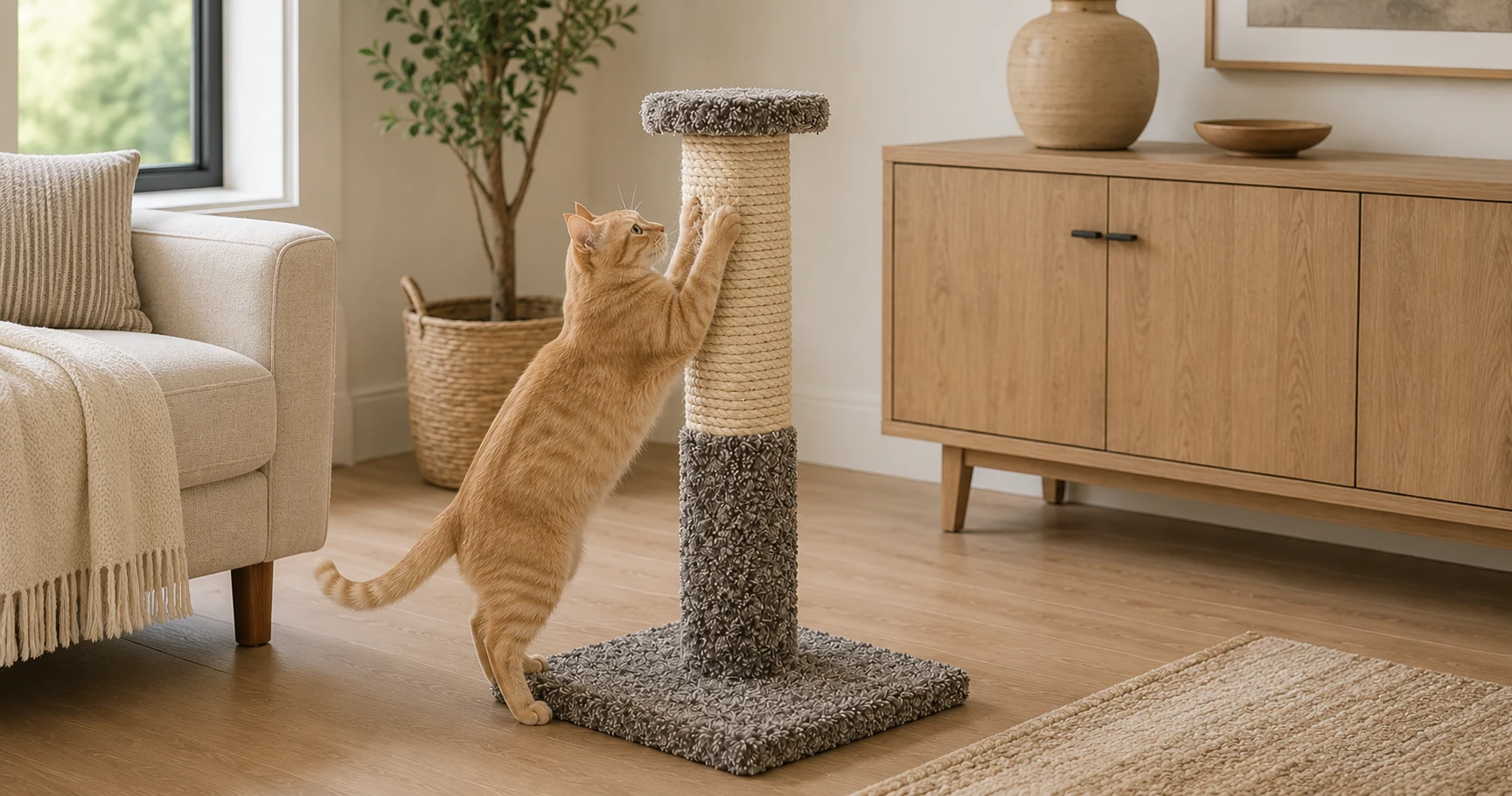
You bought a carpet cat scratching post because the texture looked nice in the listing photo, and three months later it's a matted, half-unraveled mess -- while your cat still prefers the couch corner it was supposed to replace. The material you picked was never really about texture preference. It was about whether the post could survive daily use at all.
What Sisal Actually Does That Carpet Doesn't
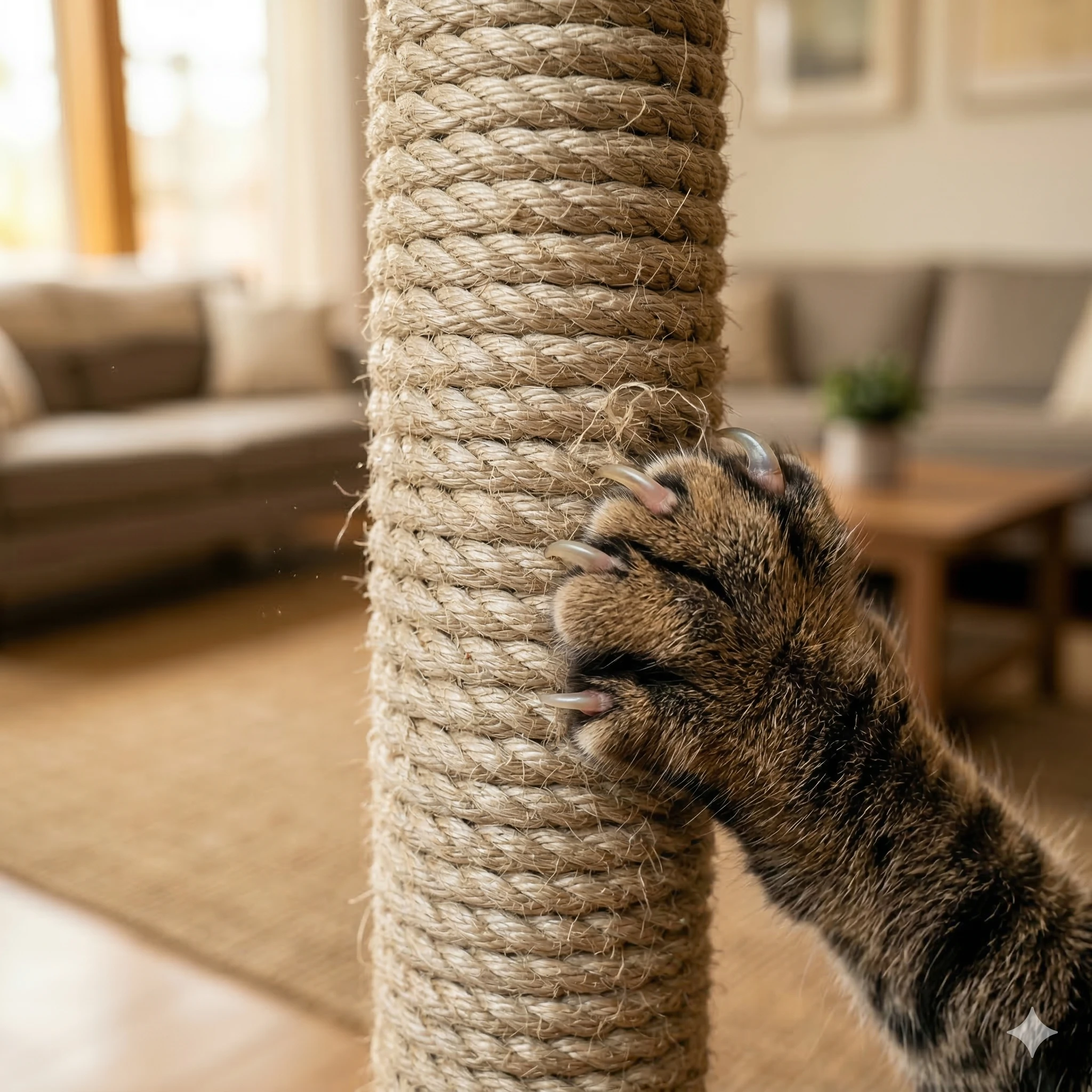
Sisal is a tightly woven natural fiber, and the weave itself is the point. It offers real resistance against a claw, which is exactly what a cat needs to dig in and effectively groom its claws rather than just brush past a soft surface.
Carpet wears differently, and not in its favor. Sisal frays in individual strands that keep offering grip as they wear down, while carpet fibers pack down and mat into a smooth, slick surface that gradually stops giving a cat anything to dig into.

"I check how a material fails, not just how it looks new. Sisal frays in thin strands you can trim off, and it keeps offering resistance the whole time it's wearing down. Carpet doesn't fray, it mats -- the fibers pack down into a smooth surface that stops giving a cat anything to dig into. A carpet post that's six months old often has less scratching resistance than a sisal post that's two years old, even though the carpet one still looks intact from across the room. Wear pattern tells you more than the listing photo does."

Is a Carpet Cat Scratching Post Ever the Right Choice?
Sometimes, yes. Kittens with softer, still-developing claws don't need the aggressive resistance sisal is built for, and some adult cats genuinely prefer carpet texture regardless of what's technically more durable -- preference doesn't always follow the spec sheet. We also carry posts that combine both materials on the same structure, which lets a cat show you which one it actually prefers instead of you guessing upfront.
But if you're choosing a single material for an adult cat with an established scratching habit, sisal is the safer long-term bet every time. Browse our full range of cat scratching posts to compare sisal, carpet, and hybrid options side by side before deciding.
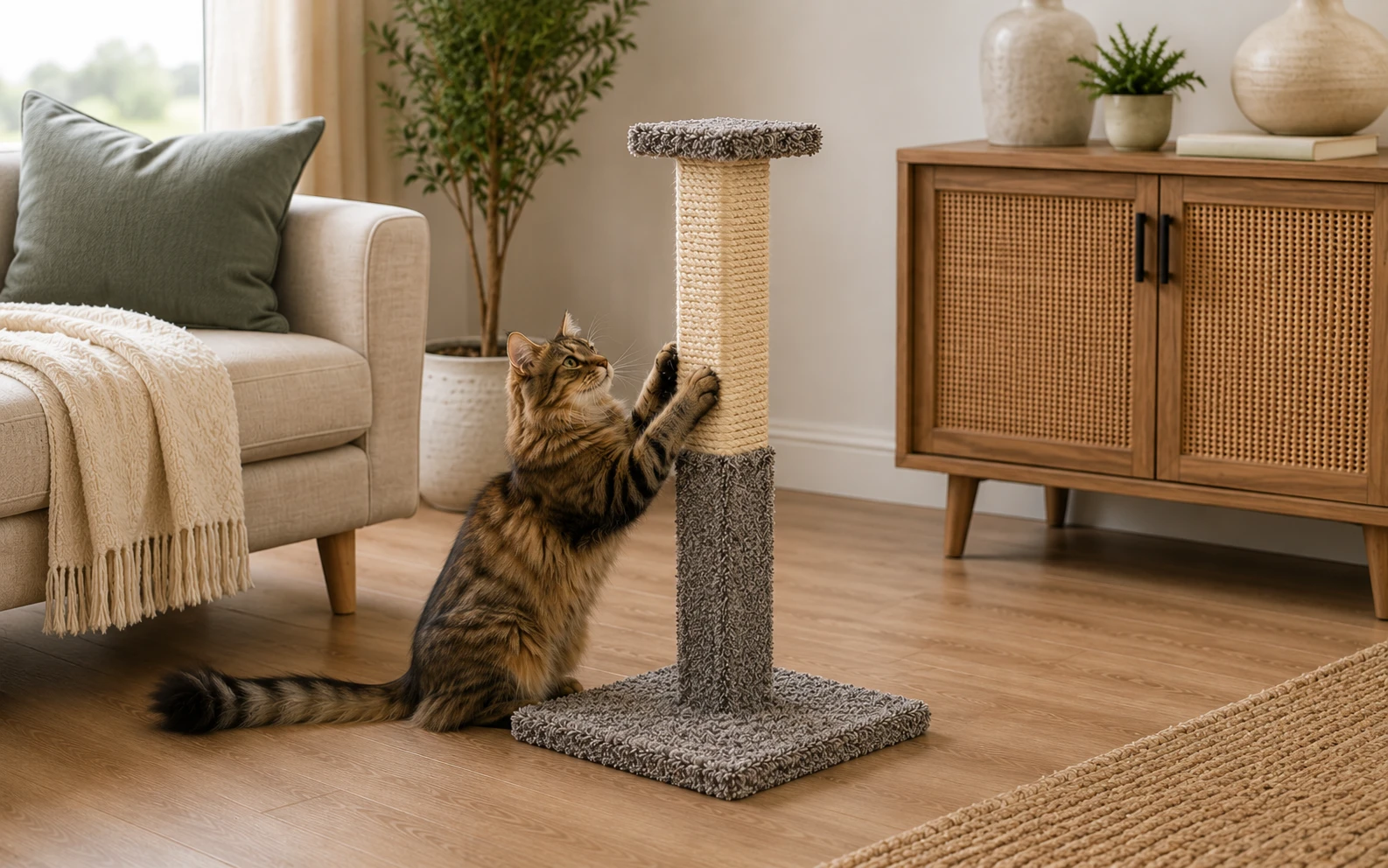
Sisal frays and keeps its grip. Carpet mats and loses it -- this is what six months of real use looks like.
What Actually Determines Which Texture Your Cat Prefers
Texture preference usually tracks with scratching motion more than it tracks with the material itself. A cat that stretches tall and drags its claws downward is doing vertical work, and a tightly wrapped sisal post is built exactly for that motion.
A cat that scratches low and sideways is often after a horizontal surface instead, and that's a case where a carpet lounger can genuinely outperform a vertical sisal post -- not because the material won, but because the angle finally matched what the cat was already trying to do. Our full cat scratching post selection includes both formats for exactly this reason.
"Watch which direction your cat actually scratches before you buy anything. A cat who stretches tall and drags claws downward wants vertical resistance, and sisal rope wrapped tight around a post gives real grip for that motion. A cat who scratches low and sideways is often after a horizontal surface, and that's where carpet loungers can genuinely outperform a vertical sisal post -- not because the material is better, but because the angle matches what the cat is already doing. Buying based on texture alone skips the more important question, which is what movement your cat is actually trying to make."