Apr 12th 2026
Kitty Condos vs Cat Condos — Which Does Your Cat Actually Want?
Your cat has an opinion about their hiding spot. Here's how to make sure you pick the right one.
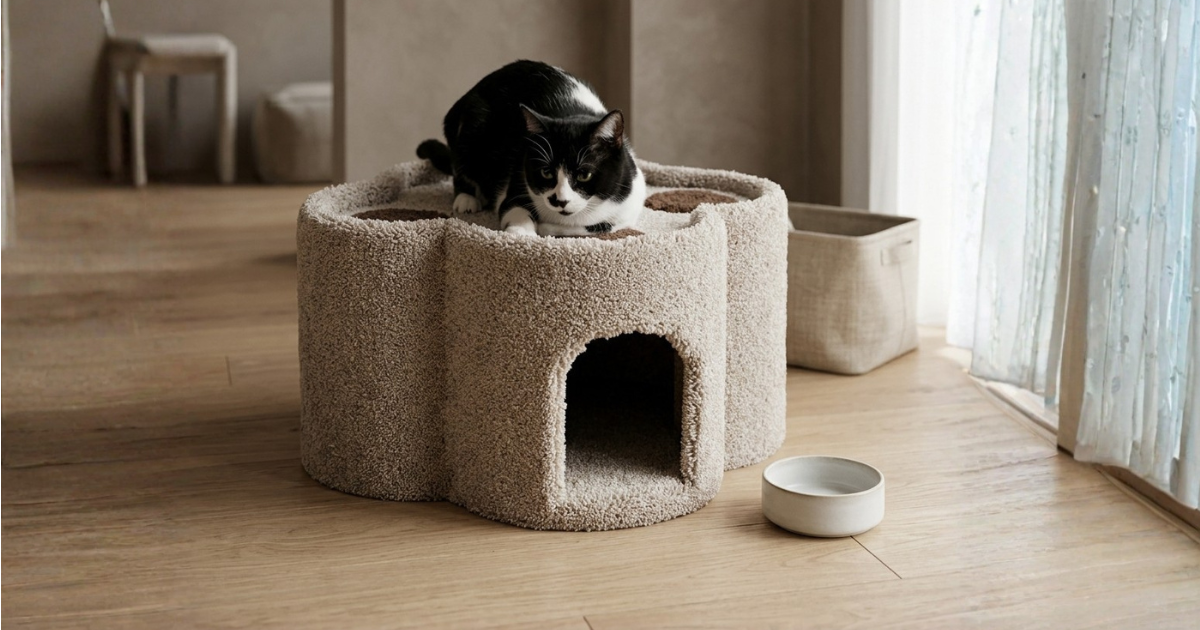
Some cats claim a condo immediately and never leave. Others walk past it for weeks. The difference almost always comes down to one thing: whether the enclosure matches their specific personality and how they use space. This guide breaks down the real distinction between kitty condos and cat condos — not the terminology, but the behavioral fit — so you can choose the one your cat will actually use.
The Behavioral Science of Hiding
Cats are both predators and prey in the natural world. This dual status means they have a hard-wired biological drive to seek out enclosed cat furniture when they are resting or feel vulnerable. Research has shown that providing hiding boxes significantly reduces stress levels in cats, allowing them to recover from environmental changes faster. These enclosed retreats act as a "safe zone" where the cat is protected on three or four sides, effectively reducing the number of angles they need to monitor for potential threats.
When selecting from the cat condos collection, it is vital to consider your cat's specific hiding style. Some cats prefer a single entry point to maintain total control over their space, while others in multi-cat homes benefit from dual-entry designs that prevent "blocking" behavior by other pets. This strategic architecture turns a simple box into a vital behavioral tool for household harmony.

"When I audit a kitty condo, I focus on the 'Confidence-to-Security' ratio. A shy cat needs a single-cat retreat that feels like an impenetrable den, often placed at mid-level heights where they can hear the room but remain unseen. A multi-function activity center with larger enclosures is better suited for social cats who enjoy a 'room with a view.' Getting the scale right ensures the cat feels embraced by the space, which immediately triggers a relaxation response."

Kitty vs. Cat: Matching Scale to Personality
The distinction between a smaller "kitty" model and a larger "cat" model is primarily one of volume and function. A cat cubby designed for a single pet is often more compact — measuring approximately 12 inches by 12 inches — providing a tight, den-like atmosphere that traps body heat, perfect for senior cats or those who run cold. These are often integrated into sleek, low-profile designs that fit underutilized corners of a room.
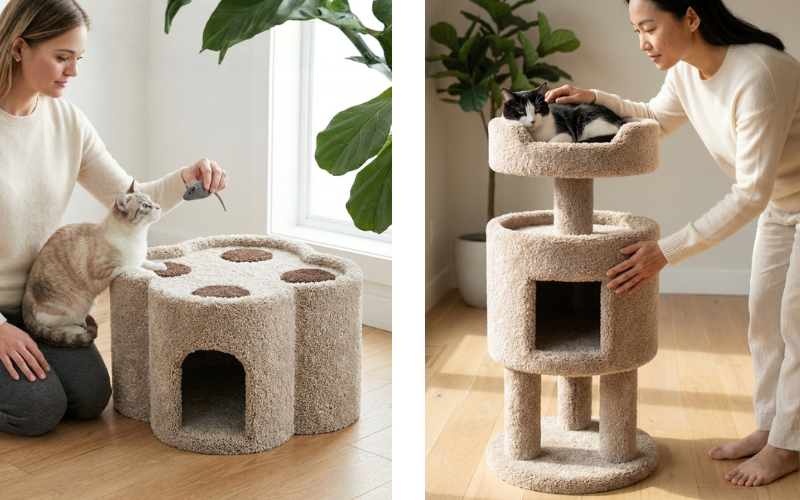
Choosing the right volume ensures your cat feels snug rather than exposed or cramped.
Larger, multi-level cat condo furniture is better for larger breeds like Maine Coons or for households where two cats might share a single large den. These units often feature interior volumes of 20 inches or more and may include internal ramps or staggered platforms. When choosing, always measure your cat from the tip of the nose to the base of the tail — the ideal cat hiding furniture should allow them to stand up and turn around completely while still feeling the "walls" of the enclosure.
Finding the Perfect Fit
Properly positioned cozy cat furniture can transform an under-utilized cat tree into a favorite destination. We recommend placing enclosures near areas of the home where you spend the most time, but away from the direct path of children or dogs. This allows your cat to be part of the family "colony" while having an immediate, unshakeable retreat at their disposal.
Look for circular entry holes between 7 and 9 inches in diameter. This size is large enough for most cats but small enough to maintain the "enclosed" feeling that triggers their security instinct. For larger breeds, prioritize the 10-inch to 12-inch entry variants found in our heavy-duty collections.

"In a quality audit of enclosed cat furniture, I look for 'corner-lock' integrity. Because an enclosure is a box, it acts as a structural anchor for the rest of the tree. We audit for ¾-inch thick solid wood or high-grade plywood walls. This mass prevents the 'echo' effect when a cat moves inside and ensures the connections for any posts above or below are rock-solid and rattle-free."