
May 23rd 2026
How to Style Cat Wall Shelves Like an Interior Designer
Cat wall shelves look intentional when they are placed intentionally -- here is how to do it.
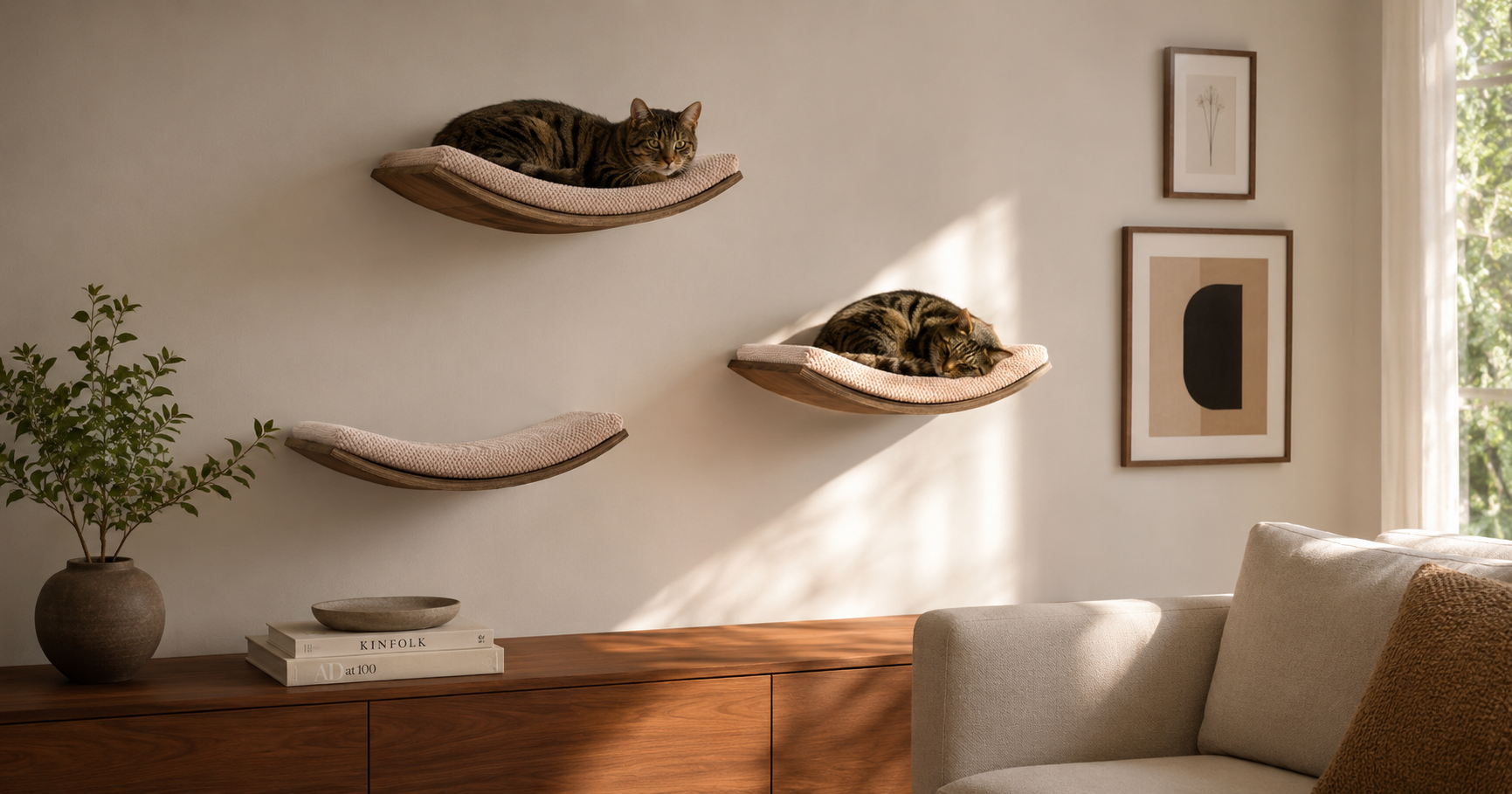
A cat wall shelf on the wrong wall, at the wrong height, with nothing else around it looks exactly like what it is: a practical object installed without much thought. The same shelf placed correctly -- at the right height, in the right relationship to the furniture below it, with a little context around it -- looks like it was always supposed to be there. The difference is not the shelf. It is knowing the three or four rules that interior designers apply automatically and most cat owners never hear about. Cat wall shelves are genuinely easy to style well once you know what you are actually doing.
Height Is the Decision That Changes Everything
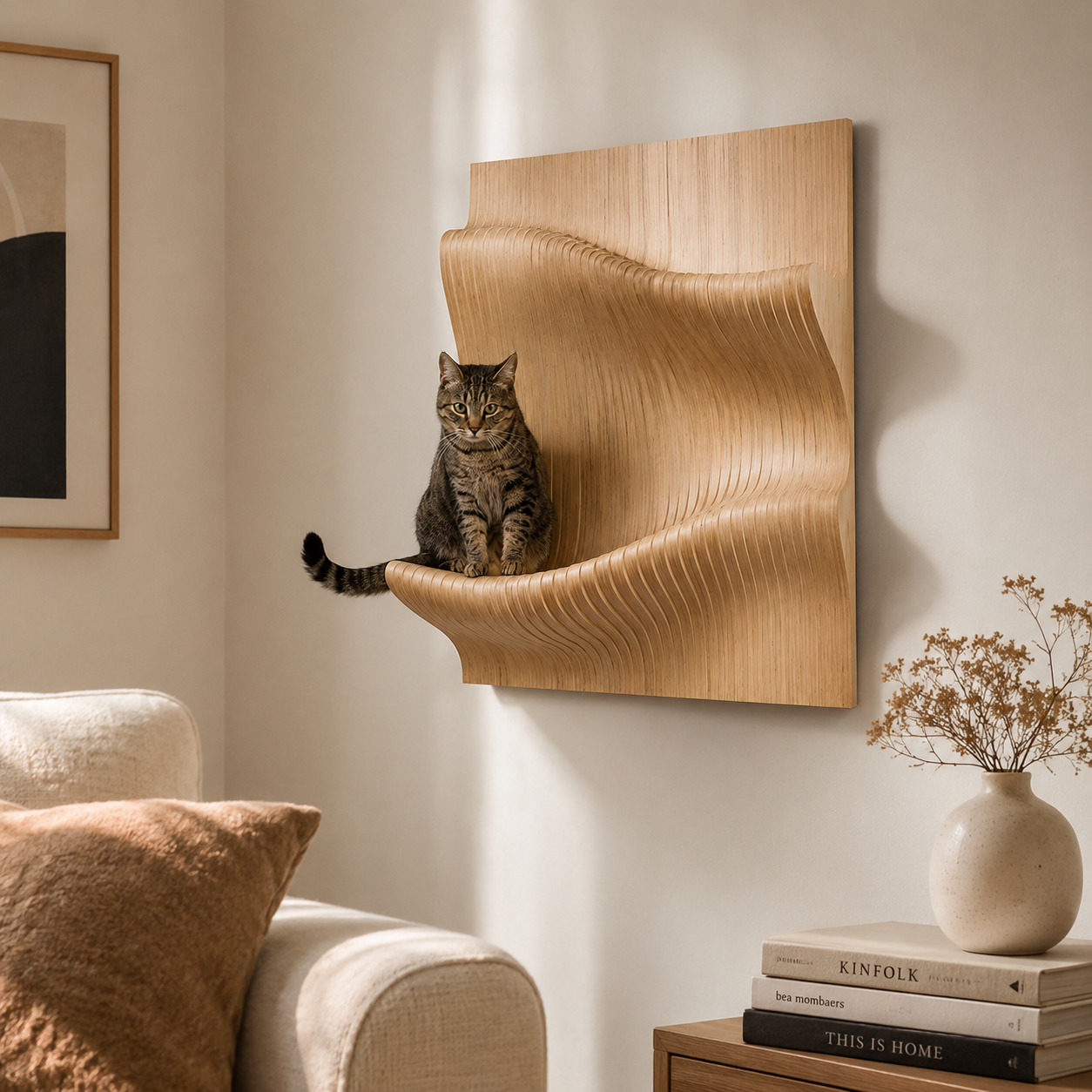
Most people mount cat wall shelves too high. It feels right -- the cat wants height, so you give them as much as possible. But a shelf at ceiling height is invisible from the room. It is not part of the visual conversation happening at eye level, so it reads as an afterthought rather than a design choice. The sweet spot for a single shelf is between 48 and 60 inches from the floor -- high enough that the cat has genuine elevation, low enough that the shelf is visible and present in the room's composition.
If you are installing multiple shelves as a climbing route, start lower than you think -- an entry shelf at around 18 to 24 inches gives the cat a way up that does not require an athletic leap, and it anchors the whole arrangement visually. Stagger the shelves in height and horizontal position rather than running them in a straight line. A straight row of shelves at the same height reads as a rail. A staggered arrangement reads as composition. The Crescent, the Flow, and the Birch Wave Lounger are particularly good for staggered arrangements -- their organic forms make a grouping feel composed rather than installed.

"The question I always ask before placing a shelf is: what is already on this wall, and what is below it? A shelf that relates to a piece of furniture below it -- a credenza, a sofa, a console table -- reads as intentional. A shelf floating in empty space reads as installed. The other thing people underestimate is the cushion color. I treat it exactly the way I would treat a throw pillow -- it should either match something in the room or contrast with it deliberately. Picking the first color in the dropdown is how you end up with a shelf that almost works."

How to Mix Cat Shelves With Regular Shelves and Art
The most common mistake is treating the cat shelf as a separate category of wall object that lives in its own zone. Interior designers do not do that. A cat shelf is a shelf -- it follows the same compositional rules as any other wall-mounted object. That means it can sit alongside framed art, regular floating shelves, or sconces without looking out of place, as long as the heights and spacing are handled correctly. A Cozy Nook or a Corner Shelf Set grouped with two framed prints at similar heights reads as a considered wall arrangement. The same shelf installed alone on an otherwise empty wall reads as an afterthought.
Spacing between shelves and other wall objects matters more than most people think. A gap of less than 8 inches between a shelf and a nearby frame feels crowded. More than 24 inches and they stop reading as related. The 10 to 18 inch range is where groupings feel intentional without being cluttered. This applies horizontally as well -- a shelf that is visually centered over a piece of furniture below it is always going to look more deliberate than one that is offset with no clear relationship. Browse our full cat wall shelf collection with this in mind and the placement decisions become much clearer.
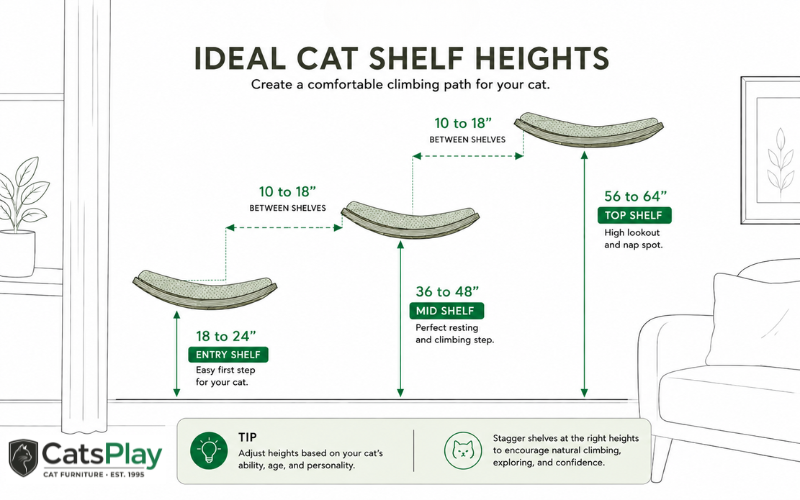
Entry shelf at 18 to 24 inches, mid shelf at 36 to 48 inches, top shelf at 56 to 64 inches -- staggered, not lined up.
The Wall Your Cat Will Actually Use
Styling a cat shelf well and placing it where your cat will ignore it are two different failures. The best-looking shelf installation in the room is useless if it is on a wall the cat has no reason to visit. Before you decide where the shelves go aesthetically, notice where your cat already spends time -- which walls they walk along, which spots they return to, which windows they gravitate toward. The shelf goes near those places first. The styling comes second.
A wall near a window is almost always the right answer. Natural light, outdoor views, and the warmth from sun exposure are all things cats seek out independently -- a shelf that captures one or more of those things will be used consistently without any encouragement. A shelf on an interior wall away from windows will be used occasionally. The Crescent, the Large Curved Birch Lounger, and the Solid Beech Wood Shelf Set all work beautifully near windows -- natural wood forms catch afternoon light in a way that makes them look even more considered as design objects.
"The placement rules that make a shelf look good to a person and the placement rules that make a cat use it are almost exactly the same. Near a window, above a piece of furniture, along a wall the cat already travels -- those are the answers from both perspectives. What I add from the behavioral side is this: a shelf that requires a difficult or intimidating jump will be tried once and abandoned. The entry point matters as much as the destination. A low first shelf, a clear route up, and a top perch with a view of the room -- that is the combination that gets used every day."

To understand why the placement decisions in this post matter so much to your cat, what cats actually do on wall shelves -- and why it matters explains the behavioral case behind every design rule. And if you're drawn to shelves that disappear into the room, home furniture that doubles as cat furniture covers the pieces where design and function solve the same problem. Browse our full cat wall shelves collection to start planning your system.