
Apr 13th 2026
Cat Wall Shelves: How to Plan, Choose & Install a Full System
Maximizing your feline's vertical territory with structural safety and curated style.
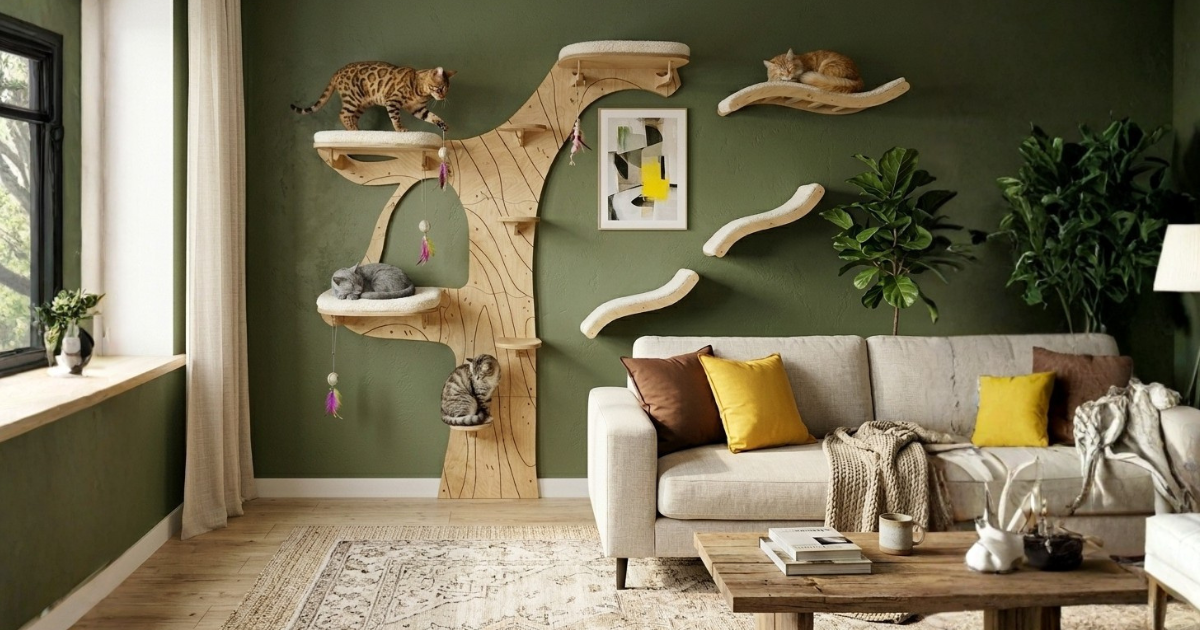
Investing in cat wall shelves is the most effective way to expand a home's footprint without sacrificing floor space, but a successful installation requires precise planning before the first bracket meets the wall. While floor-standing towers are plug-and-play, wall-mounted cat furniture creates a permanent architectural element that must balance your interior design with the physical capabilities and weight-bearing needs of your cats.
Layout Planning: Creating the Feline Highway
The primary mistake in planning a wall cat tree is failing to account for "territorial flow." To prevent feline conflict, especially in multi-cat households, a layout should never include a dead end. Every climbing path should ideally have two points of entry and exit. When mapping your wall, aim for a vertical distance of 12 to 18 inches between surfaces. This range accommodates the jumping capabilities of most breeds while remaining accessible for senior pets who may prefer a more graded ascent. You can explore a variety of modular components in our cat wall climbing systems to build a customized circuit.

"When auditing cat wall shelves, the focus is on environmental integration. A wall system shouldn't look like an afterthought; it should complement your cabinetry or shelving. I look for systems that offer mixed textures — solid wood for structural perches and sisal or carpet for high-traction runways. For homes with multiple cats, I recommend alternating between 18-inch deep lounging perches and narrower 10-inch transit shelves to keep the 'highway' moving smoothly without congestion."

Structural Integrity and Mounting Safety
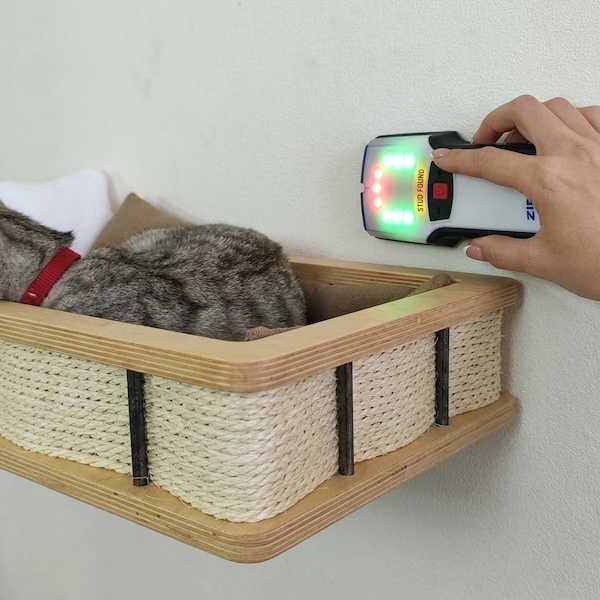
The safety of a wall mounted cat furniture system is entirely dependent on its connection to the home's structure. While drywall anchors have improved, the dynamic force of a 15 lb cat launching off a shelf can exert hundreds of pounds of pressure on a bracket. For this reason, we strictly recommend mounting all primary load-bearing brackets into wall studs. Studs are typically spaced 16 inches apart on center — using a high-quality stud finder and level is non-negotiable for a cat wall shelves installation.
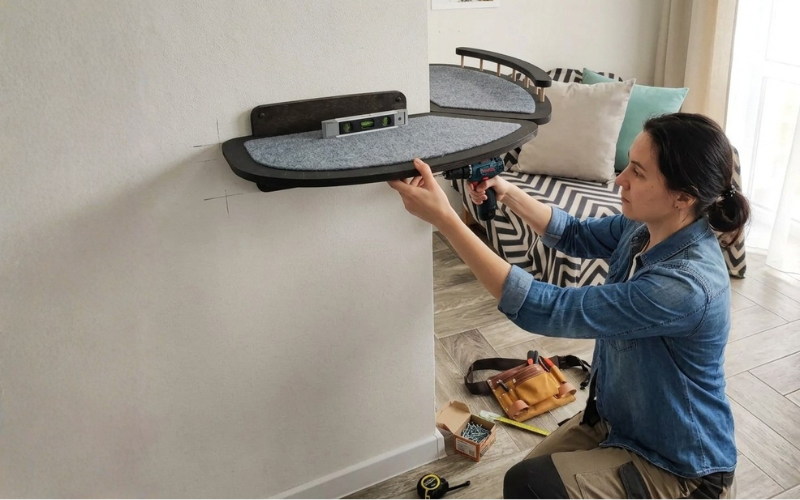
Precision tools are essential for ensuring a level and structurally sound vertical playground.
Integrating Mixed Elements for Enrichment
A comprehensive system in the Walls & Windows category often involves more than just flat surfaces. To maximize enrichment, consider integrating rope bridges to create suspense and movement, or positioning a cat perch wall unit near a window to allow for sunbathing. In fact, many successful layouts terminate near cat window perches, providing a high-value destination at the end of the climbing circuit.
When selecting your components, pay close attention to weight limits. Premium systems are often rated for 50 lbs or more, allowing for the lever-load that occurs when a cat leaps from the surface. Always check that the shelf depth is sufficient for your cat's breed — a Maine Coon requires a significantly deeper footprint than a smaller mixed breed to ensure they can turn around without slipping.

"The weak point in most wall systems is the bracket-to-shelf joint. In my quality audit, I look for 'zero-flex' hardware. We prioritize heavy-gauge steel brackets that utilize multiple points of contact with the shelf. If a shelf vibrates or 'bounces' when a cat lands, it will eventually loosen the wall screws. Using solid wood with a minimum ¾-inch thickness ensures that the mounting screws have enough density to bite into, creating a permanent, rattle-free installation."

Before diving into the specifics of installation, it's worth understanding why cats need vertical territory in the first place — and if you're in a smaller home, vertical furniture solutions for apartments covers how to plan a wall system around limited square footage. For multi-cat households, how vertical territory creates feline peace explains the behavioral case for building a wall system your cats can share without conflict.