
Apr 12th 2026
Cat Stairs for Beds: How to Choose the Right Steps for Your Cat
Because the bed is still their favorite place — it just got a little harder to reach.
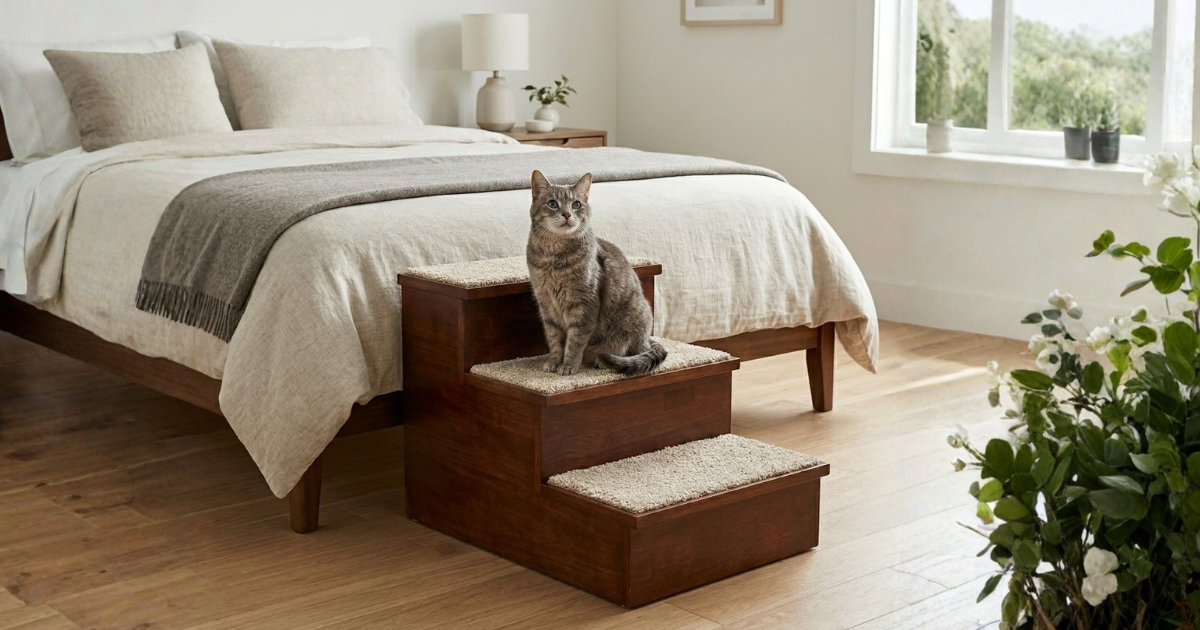
Most cat owners notice it gradually. One day their cat just... stops jumping up. Maybe they sit at the edge of the bed and turn away. Maybe they make it, but the landing looks harder than it used to. Cat stairs for bed access are one of those simple fixes that make an immediate difference — not just for mobility, but for the connection your cat has with the spaces they love. Here's how to find the right fit.
The Feline Case for Controlled Incline
As cats age, they frequently develop "behavioral hesitation" — a state where they pause at the base of a bed or couch, weighing the cost of the jump against the reward of the nap. This hesitation is often the first sign of arthritis or joint discomfort. Purposeful mobility aids allow your cat to remain a part of the family "colony" by keeping high-value vertical territory accessible. Whether you are searching for solutions in the Walls & Windows category or simply looking to bridge the gap to a high mattress, the right support system restores their range of motion.

"When auditing cat stairs for bed layouts, I look for 'territorial continuity.' If a cat stops visiting the bedroom because the bed is too high, their bond with the owner can suffer. By providing cat steps for older cats, we are protecting their psychological well-being as much as their physical joints. A stable set of feline risers ensures they never feel 'trapped' on the floor, allowing them to follow their natural instincts to sleep in elevated, safe environments."

Stairs vs. Ramps: Selecting the Right Path
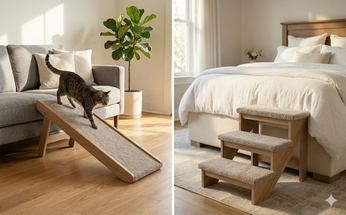
The choice between a step-style system and a continuous incline depends entirely on your cat's specific mobility profile. Traditional pet stairs are excellent for cats who still possess a fair amount of balance but need to reduce the vertical distance of a single leap. They take up less floor space and integrate more easily into tight bedroom layouts. However, for cats with advanced arthritis or those recovering from surgery, a dedicated ramp provides a smoother transition that eliminates the lifting motion of the leg entirely. You can explore both varieties in our cat steps collection.
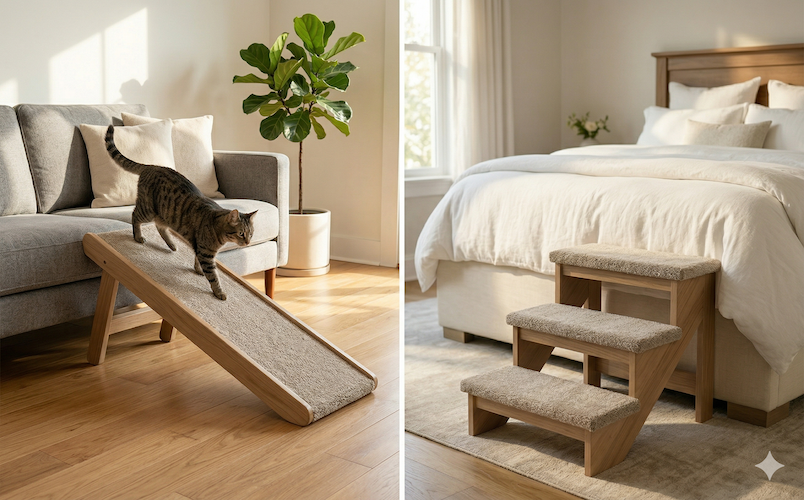
Choosing between a ramp and steps depends on your pet's specific joint health and balance.
Stability Benchmarks for High Surfaces
For large breed cats or households with multiple pets, the engineering of the support system is paramount. If a set of stairs wobbles or slides during a mid-climb transition, a cat — particularly a senior — may experience a "trust failure" and refuse to use the aid again. When matching mobility risers to a mattress height, ensure the top platform is within 6 to 10 inches of the destination. This ensures a short, confident step onto the bed rather than a secondary jump that defeats the purpose of the equipment.
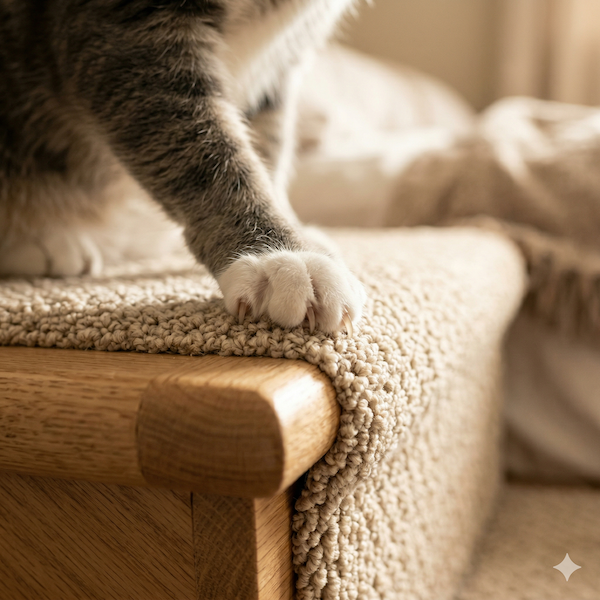
Traction is equally vital. Senior paws often lose grip on smooth surfaces like plastic or polished wood. High-traction carpet or rubberized tread ensures that every step is secure. By investing in furniture-grade materials like solid wood, you provide the necessary base mass to keep the unit stationary, even when a 20 lb Maine Coon is navigating the incline.

"During a quality audit of feline mobility aids, I prioritize 'structural rigidity.' If a set of stairs flexes under weight, it creates a sense of instability that is terrifying for a senior cat with reduced balance. We audit for a minimum ¾-inch solid wood construction and heavy-duty joinery. For high beds, the base of the unit must be wide enough to prevent lateral tipping. Stability is not a comfort feature; it is a fundamental safety requirement."

If joint health or mobility is the underlying concern, our guide to joint health and support furniture for senior cats goes deeper on why these modifications matter and what to look for across all furniture types — not just stairs.