Sep 1st 2026
Cat Ramp vs Stairs: Which One Actually Gets Used?
Sarah's guide to ramps vs. stairs -- and why most of what's sold as a cat ramp is actually something else entirely.
You bought a cat ramp because your cat is getting older and the jump onto the bed looked like it was starting to hurt. Then it sat there for a week, mostly ignored, while your cat kept making the same painful jump right next to it.
Why "Cat Ramp" Usually Means Something Different Than You Think
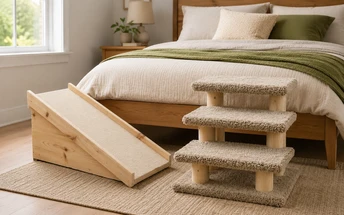
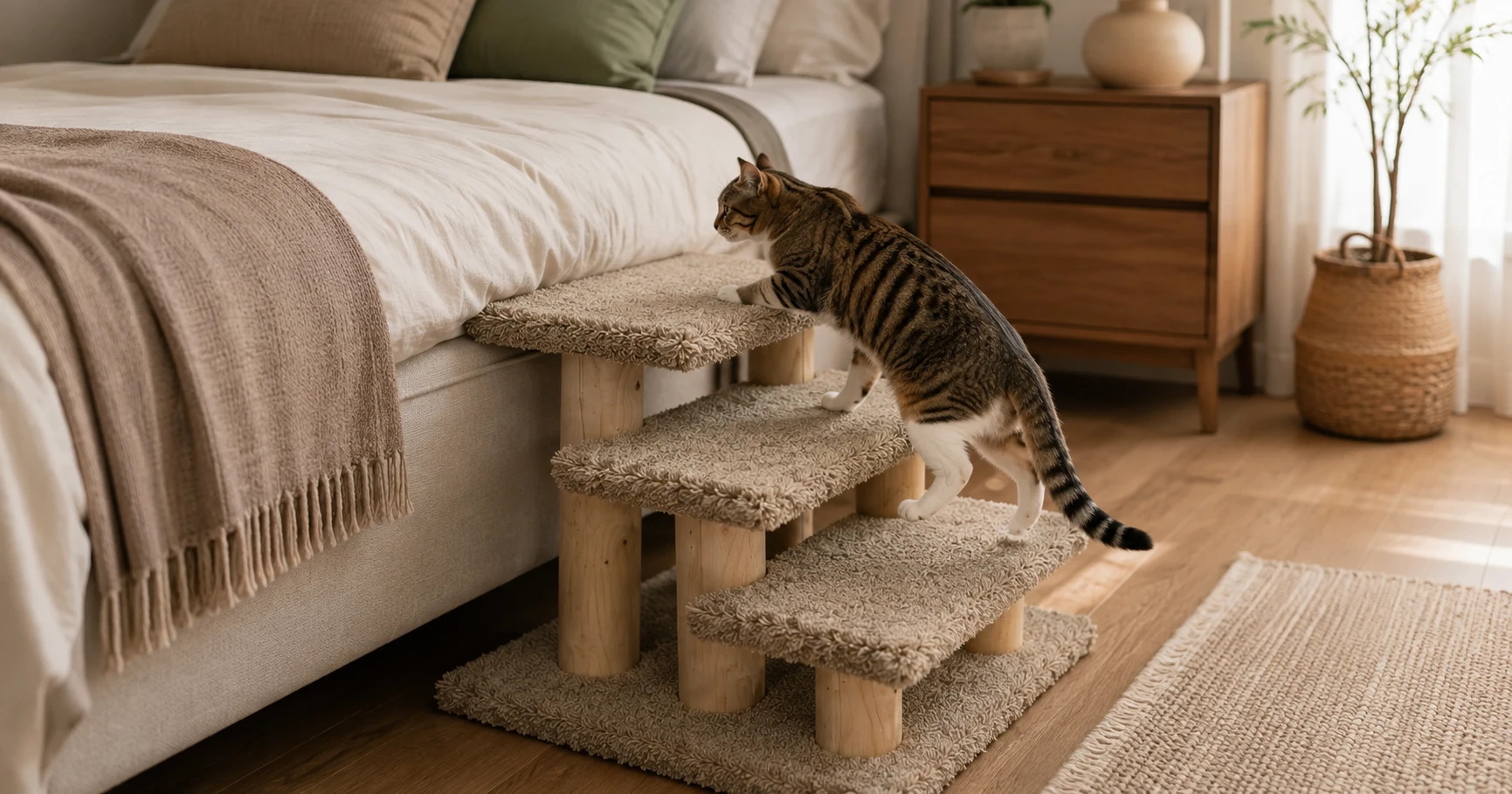
Most products sold as a cat ramp aren't actually a smooth incline. They're a series of shallow steps built into an angled frame, which is a genuinely different structure than the plain sloped board the word "ramp" suggests.
A true continuous-incline ramp is actually rare, and there's a real reason for that. Our guide to joint health and mobility support for senior cats goes further into how a cat's body handles different kinds of movement as it ages.
"A true smooth ramp asks a cat to walk on a continuous slope, and that's a different physical task than climbing a step. Cats are built for discrete, confident footholds -- that's how they climb naturally, whether it's a tree branch or your kitchen counter. A stepped design gives them that same one-foot-at-a-time motion, just angled toward a bed or window instead. That's usually why a plain incline gets ignored and a stepped version gets used daily. It's not the cat being difficult. It's the format asking for a motion cats don't naturally default to."

So When Does a True Ramp Actually Win?
There are real cases where a true ramp beats stairs. Advanced arthritis or very limited joint flexion can make even a small step height genuinely painful, and a smooth incline removes that repeated bend entirely. Very young kittens who haven't built jumping confidence yet often do better on a gentle slope than a taller first step.
Multi-pet households are the other clear case -- if a dog needs the same access point, cat ramps built wide and sturdy enough for both pets tend to outperform a narrow cat-scaled stairway. Outside of those specific situations, most cats and most households genuinely do better with stairs.
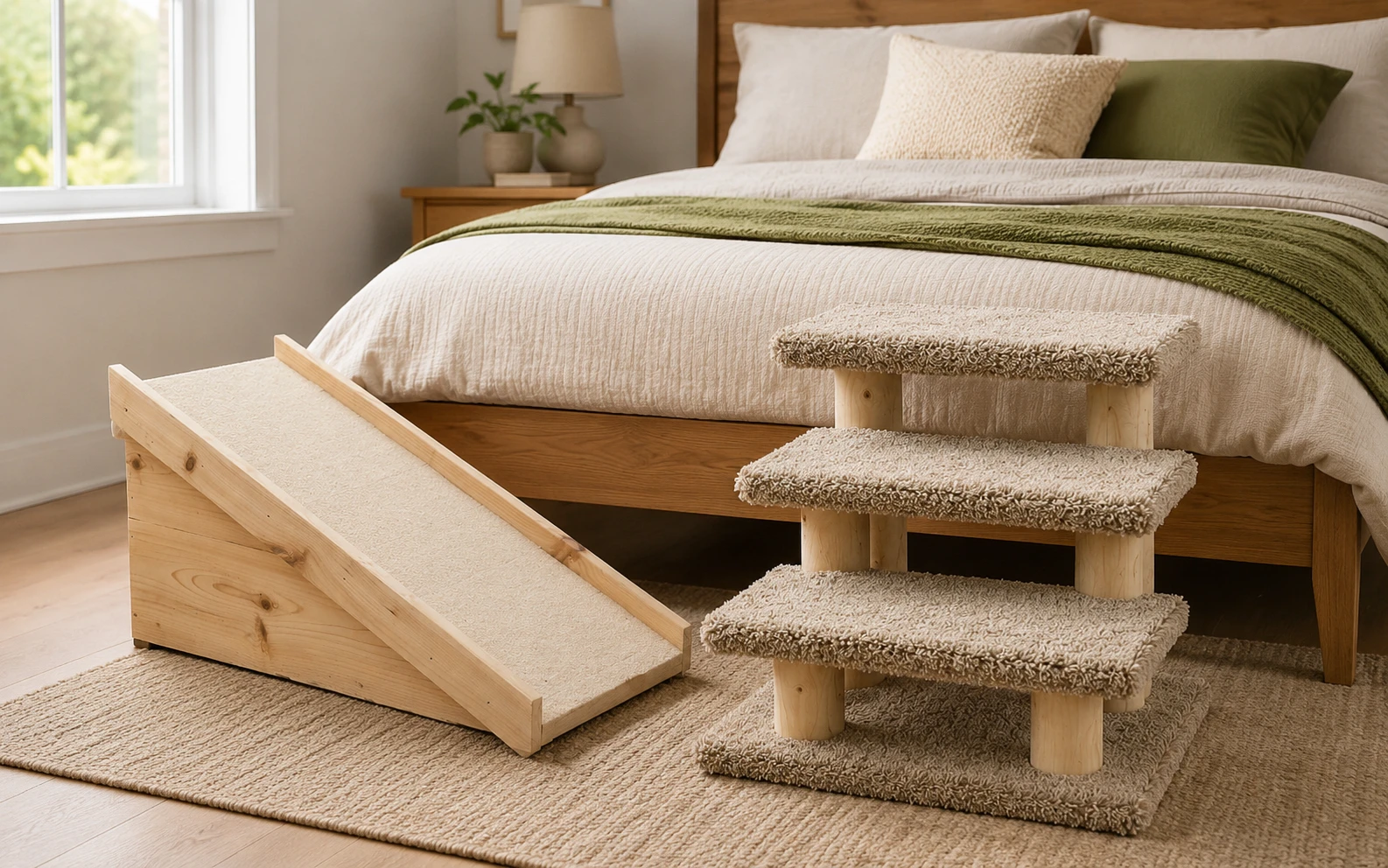
Two different structures wearing the same name -- the difference matters more than the label does.
What Actually Makes Either One Safe
The incline angle matters regardless of which format you pick. A stepped design that's too steep asks just as much of a compromised joint as a plain ramp would, so breaking a climb into steps doesn't automatically make it gentle.
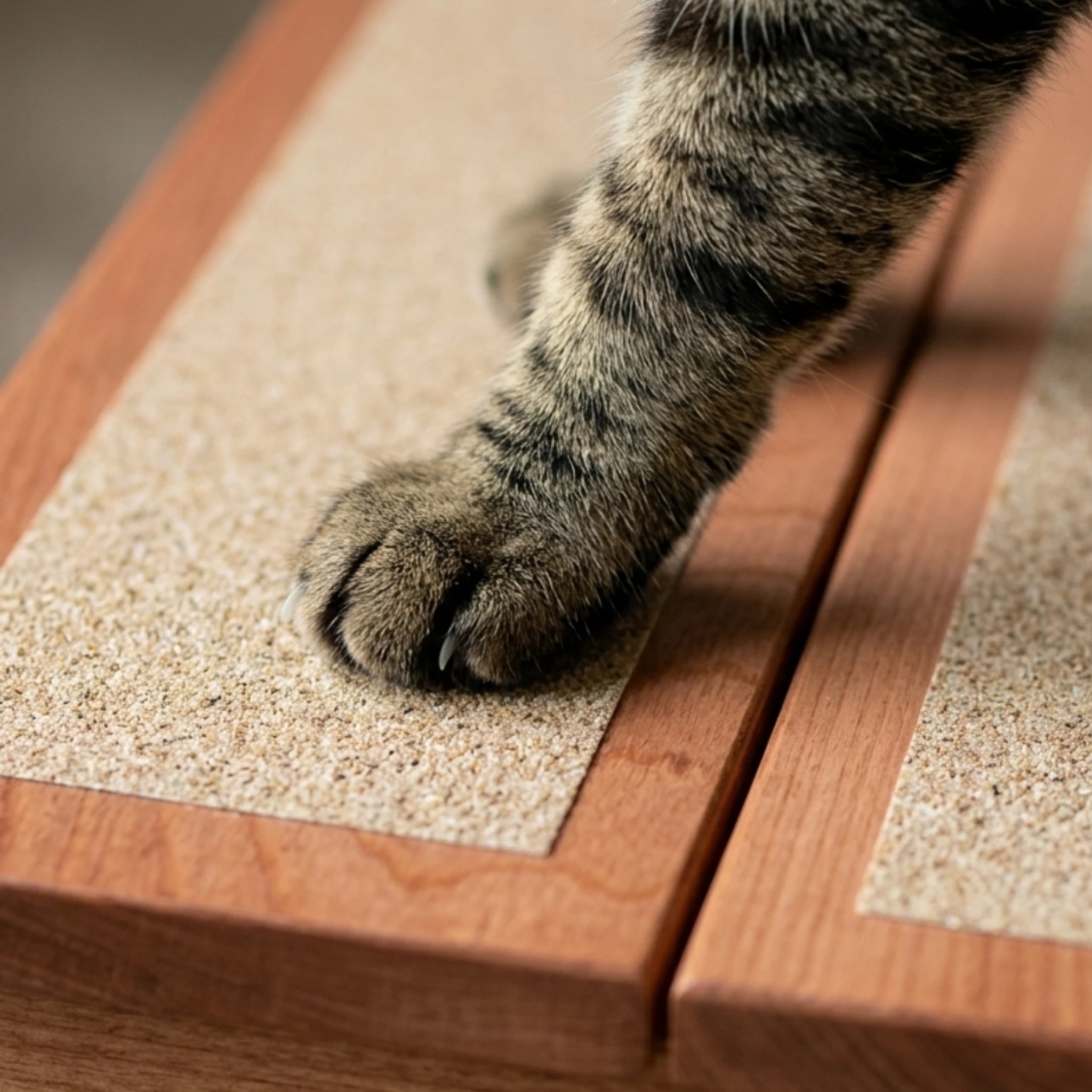
Traction matters just as much as angle. A smooth, glossy surface photographs well but turns hazardous the moment a paw is even slightly damp, which is worth checking before you buy either format -- our full cat steps selection includes both, so you can compare tread and traction side by side.

"I check the angle before I check anything else, ramp or stairs. Anything steeper than about a 30-degree incline is asking a compromised joint to do real work, no matter how many steps you break it into. Traction matters just as much -- a smooth painted surface looks nice in a photo and turns into a hazard the first time a paw is even slightly damp. I want a grippy, textured tread on every surface a paw will actually land on, and a base wide enough that the whole thing doesn't rock when a cat steps on the top platform. Those two things matter more than whether you bought a ramp or a stairway."