Mar 24th 2026
What Makes a Cat Tree Actually Sturdy? Brian’s Quality Standards Audit
Investing in a sturdy cat tree is the difference between providing a lifelong sanctuary and buying a temporary safety hazard. Discover the engineering audit that ensures your furniture remains stationary under pressure.
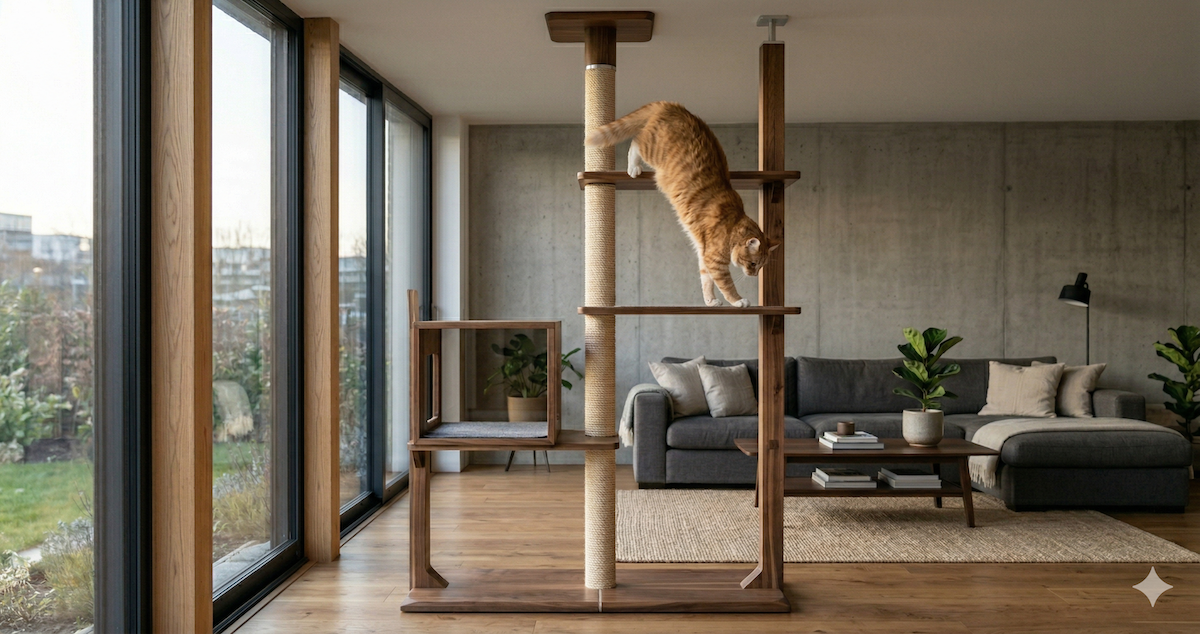
A stable structure is a prerequisite for feline territorial confidence.
When searching for a new feline tower, the "wobble" is the primary point of failure. A swaying unit is an insecure surface that many pets will eventually avoid. To solve this, we apply a rigid framework to evaluate every piece of furniture we curate. We focus on the shift from "rented" quality found in mass-market items to the long-term asset of an engineered, heavy duty cat tree.
Stability and the Center of Gravity
Stability begins at the floor. While many alternatives use .25 inch MDF hidden under fabric, a stable cat tree requires a foundation with significant mass. We look for a minimum thickness of .75 inches in the base material, preferably utilizing high-grade plywood or solid wood to lower the center of gravity and provide a true counterweight.
"For a cat, an unstable sturdy cat tree is a signal of danger. If a surface sways when they land, it triggers an immediate stress response. By ensuring the unit is stationary, we provide the territorial security they need to stay off counters and bookshelves. Quality construction is a direct investment in your pet's emotional well-being."

The Importance of Post Diameter
Height magnifies instability. Standard industry posts often measure between 2.5 inch and 3 inch in diameter, which acts as a long lever that vibrates with every movement. For a cat tree that doesn't wobble, we prioritize support columns with a minimum 4 inch diameter. Increasing the diameter to 4.5 inches or 5 inches provides the surface area necessary to distribute the dynamic force of a jumping cat.
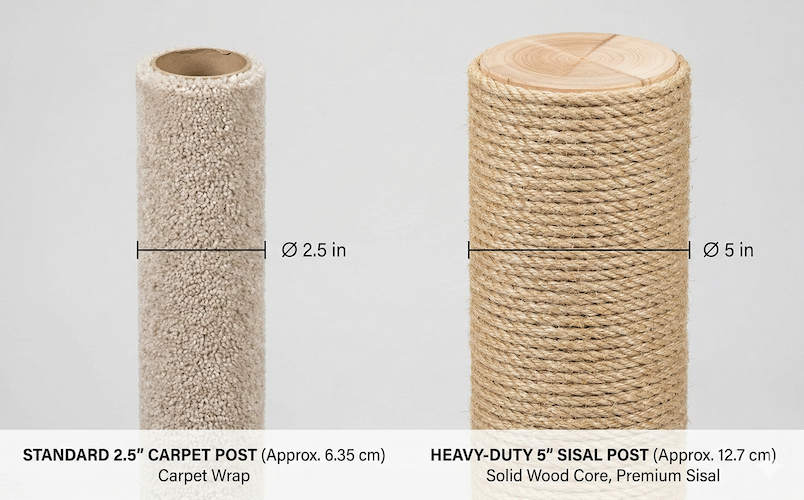
Support columns with larger diameters effectively eliminate structural sway.
Precision Hardware Systems
Internal construction is where quality is often sacrificed. We move away from staples and thin wood screws in favor of industrial-grade connections.
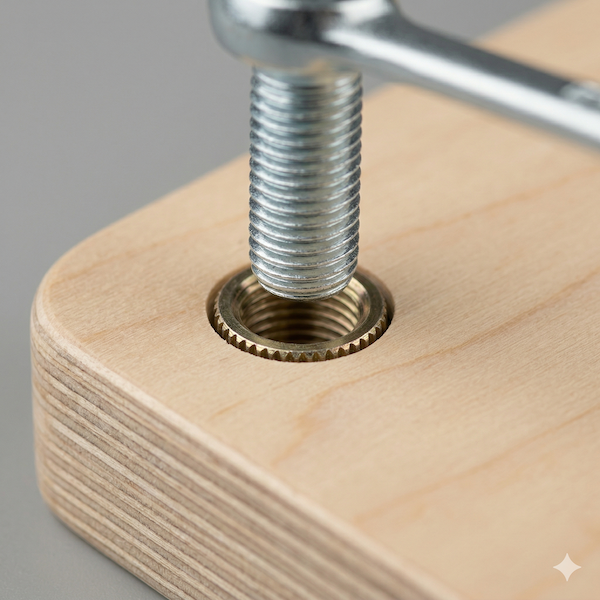
Industrial-grade hardware ensures a permanent, tight-to-wood connection.
Metal-on-Metal Connections: To prevent stripping, look for threaded metal inserts recessed into the wood. This allows the hardware to be tightened securely without damaging the internal fibers of the post.
Zinc-Plated Bolts: Large-diameter steel bolts are essential for resisting lateral force. These components ensure the unit remains a single, solid piece of furniture over years of active use.
Dynamic Weight Ratings: A high-quality climbing structure should maintain a static weight rating between 60-80 lbs. This capacity ensures that the force exerted during a high-speed launch does not compromise the hardware.
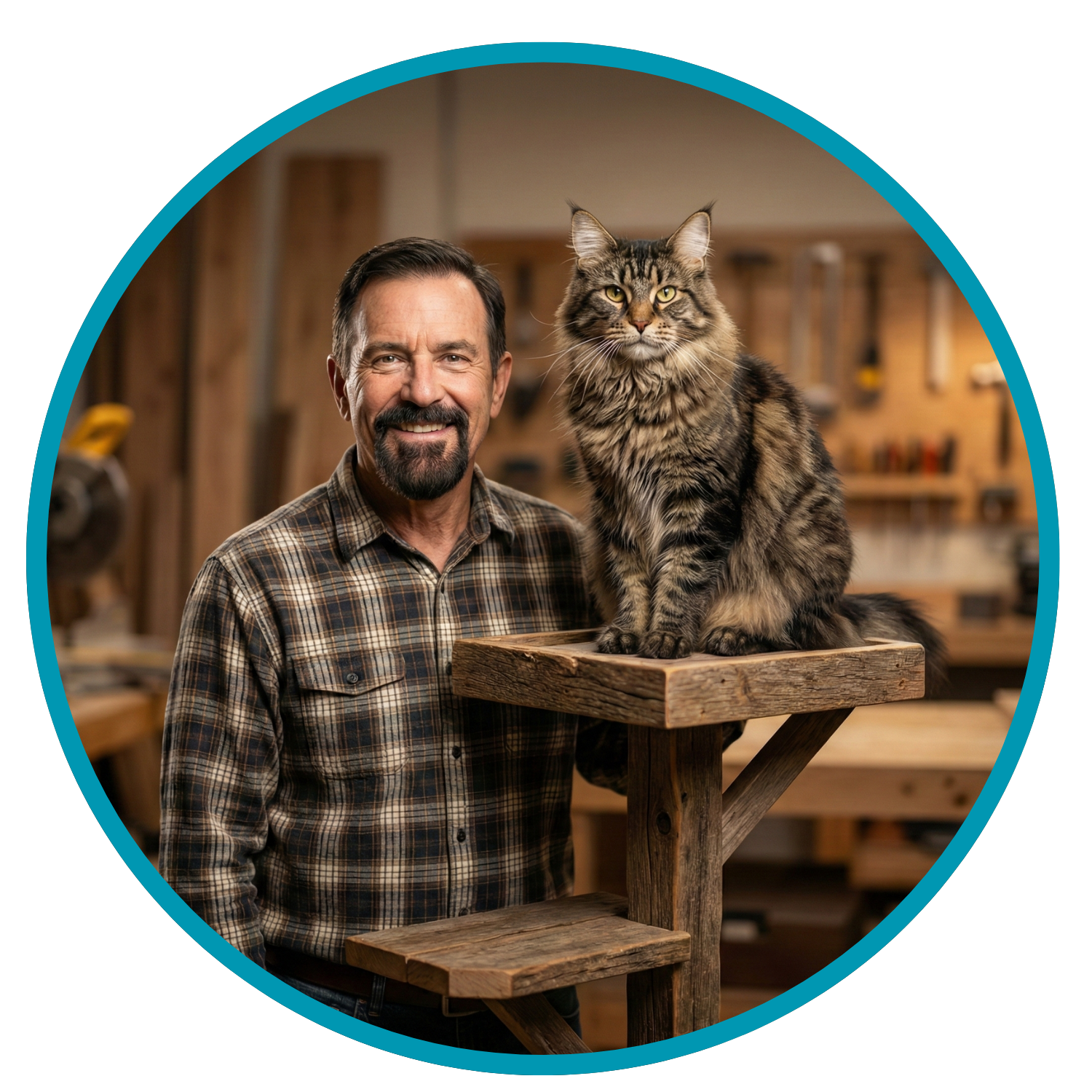
"During a Quality Standards Audit, I look at the lever-load. A cat leaping from 5 feet exerts force far beyond its static weight. If the hardware is thin or the base is light, the structure will eventually fail. We use oversized bolts and solid wood cores because stability is safety. We build for the dynamic reality of how cats actually move."

Choose a Solution That Lasts
Don't settle for furniture that requires constant replacement. Our collections are audited for material thickness, post diameter, and hardware precision to ensure your cat has a secure place to climb for years to come.