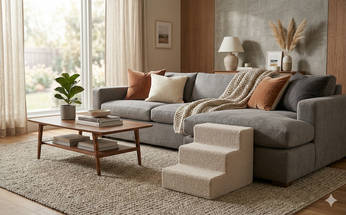
Mar 24th 2026
Helping Aging Cats Stay Mobile: The Expert Guide to Cat Stairs
Integrating cat stairs into your home is one of the most proactive steps you can take for a senior pet. Discover how these simple aids preserve joint health and maintain your cat's confidence in their golden years.
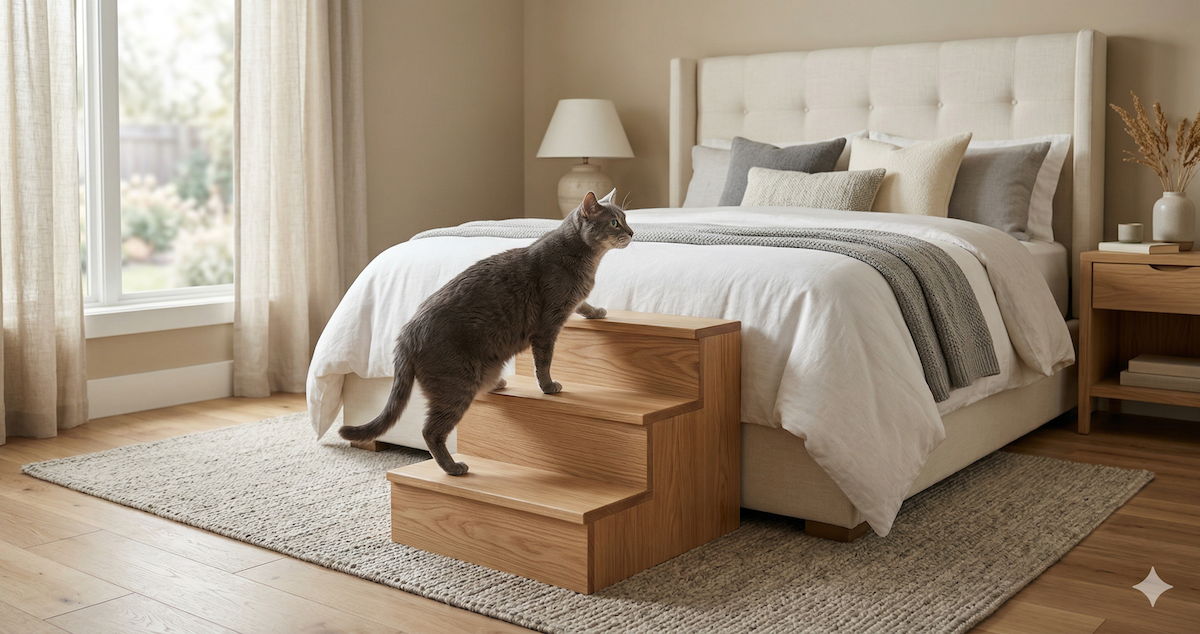
Accessibility is a cornerstone of feline dignity and independence as they age.
As cats enter their senior years, the graceful leaps that once defined their movement often become sources of physical strain. While we often think of feline mobility in terms of play, the ability to reach favorite resting spots—like the bed or the sofa—is a vital part of their territorial routine. Transitioning from high-impact jumping to graded climbing through mobility aids is essential for preserving long-term joint health.
The Invisible Impact of High Leaps
In the wild, a cat’s joints are designed for explosive power. However, the repetitive landing on hard indoor flooring from a 30 inch bed puts significant stress on the carpal and elbow joints. For a cat managing early-stage arthritis, this daily impact can lead to a "territorial contraction," where the cat stops visiting certain areas of the home because the cost of the jump is too high. By providing a pet ladder, you remove the physical barrier, encouraging them to remain active and engaged with their favorite spaces.

"When conducting a Feline Behavior Audit for cat steps, the first thing I look at is 'behavioral hesitation.' If your cat pauses, looks up at the bed, and then walks away, they are telling you the jump is painful. Properly positioned feline climbers restore a cat's sense of autonomy. It’s not just about the joints; it’s about ensuring they don't feel 'trapped' on the floor as they age."

Choosing Between Steps and Graded Ramps
The choice between a step-style system and a cat ramp depends on your pet’s specific mobility profile. Stairs are often more compact and suitable for cats who still have good balance but need to reduce the height of their climb. For cats with more advanced mobility challenges or vision impairment, a ramp provides a continuous, low-impact incline that eliminates the need for any lifting motion at all.
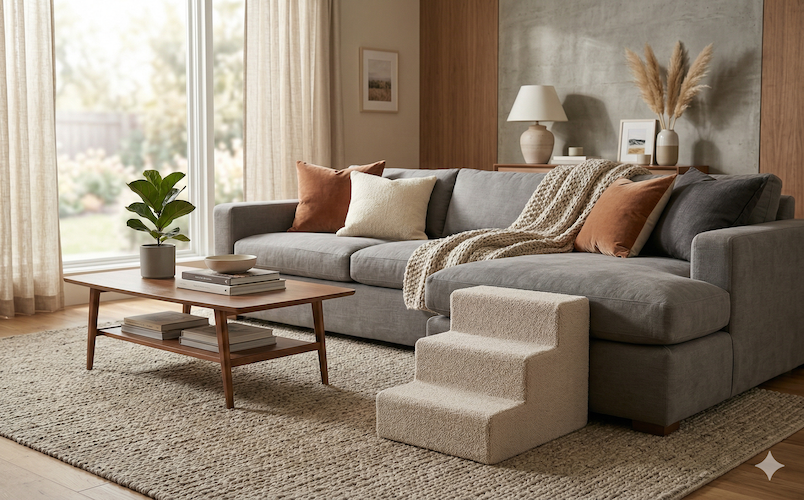
Strategic placement in high-traffic areas ensures your cat doesn't have to 'ask' for help.
Engineering for Stability
A senior cat is often more cautious. If a climbing assist feels flimsy or tips during use, the cat may never try it again. This is why we prioritize structural density in our curated selection.
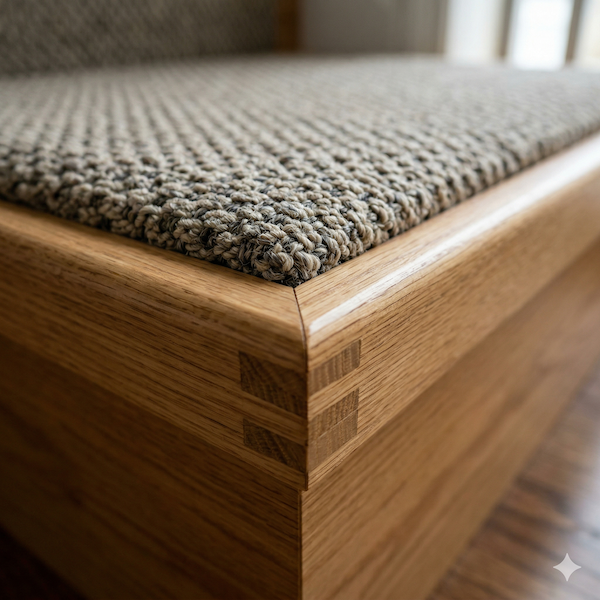
Traction is critical for aging paws that may have reduced grip strength.
Traction Surface: Senior paws often have reduced grip. We look for high-traction surfaces that provide secure footing without the risk of slipping. Materials should be durable enough to withstand daily use while remaining soft on sensitive pads.
Base Mass: A lightweight plastic unit can slide on hardwood floors. Our audit looks for a heavy base—often .75 inch wood—that keeps the unit stationary during the weight transition from floor to step.
Step Depth: For a pet ladder to be effective, the tread must be deep enough for the cat’s entire body to feel supported. We prioritize designs with generous depth to prevent the cat from feeling "crowded" as they ascend.
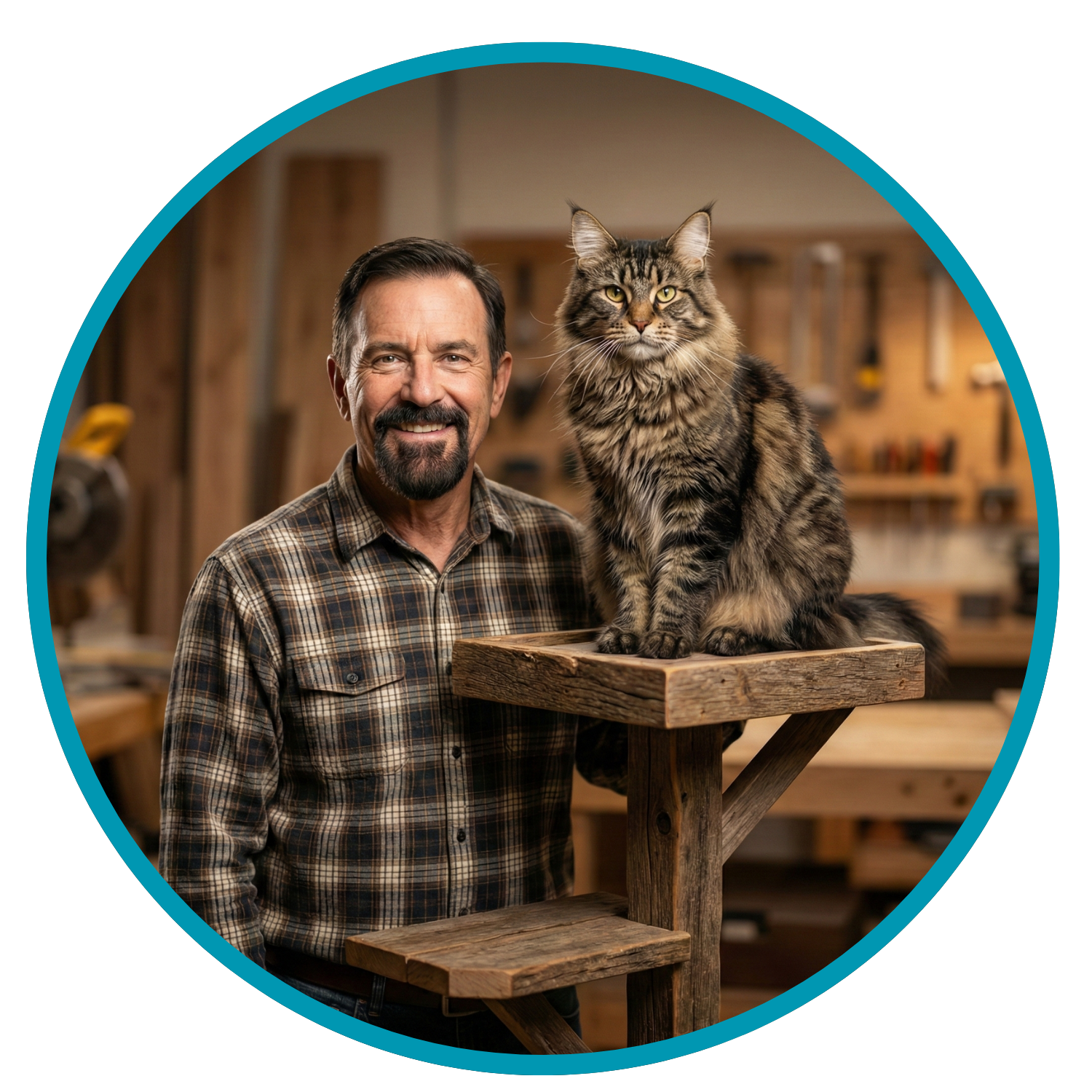
"During a Quality Standards Audit on mobility furniture, I test for 'flex.' If a set of stairs bows under a cat’s weight, it feels like an earthquake to them. We use solid wood cores because they provide a dead-stop feel. When a senior cat puts their weight down, they need to know that the ground isn't going anywhere. Stability is the only way to earn an older cat's trust."

Support Their Independence
Don't wait for your cat to stop reaching their favorite spots. By introducing supportive furniture now, you preserve their range of motion and keep them at the center of the family home.